Out of Xela
December 2014
Dear Matt: You’ve been quite patient waiting for this letter, and well, here it is at long last. The sad truth is that life’s been really boring for me so there hasn’t been much to write about, just Spanish class and studying almost all day, every day. I had ventured outside of Xela just two times in my first six weeks here and the streets were starting to feel claustrophobic. I was very overdue for a chance to cut loose.
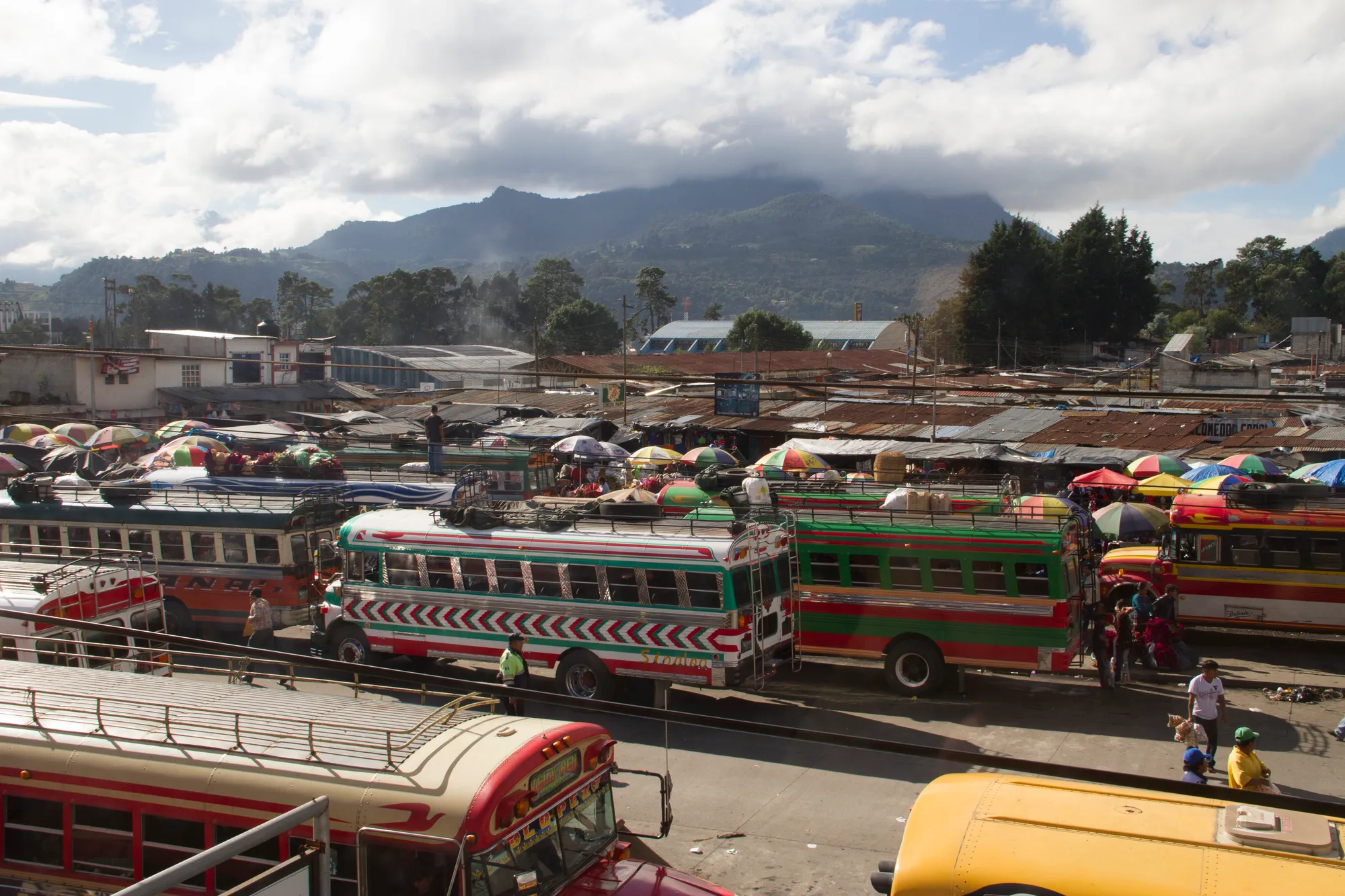
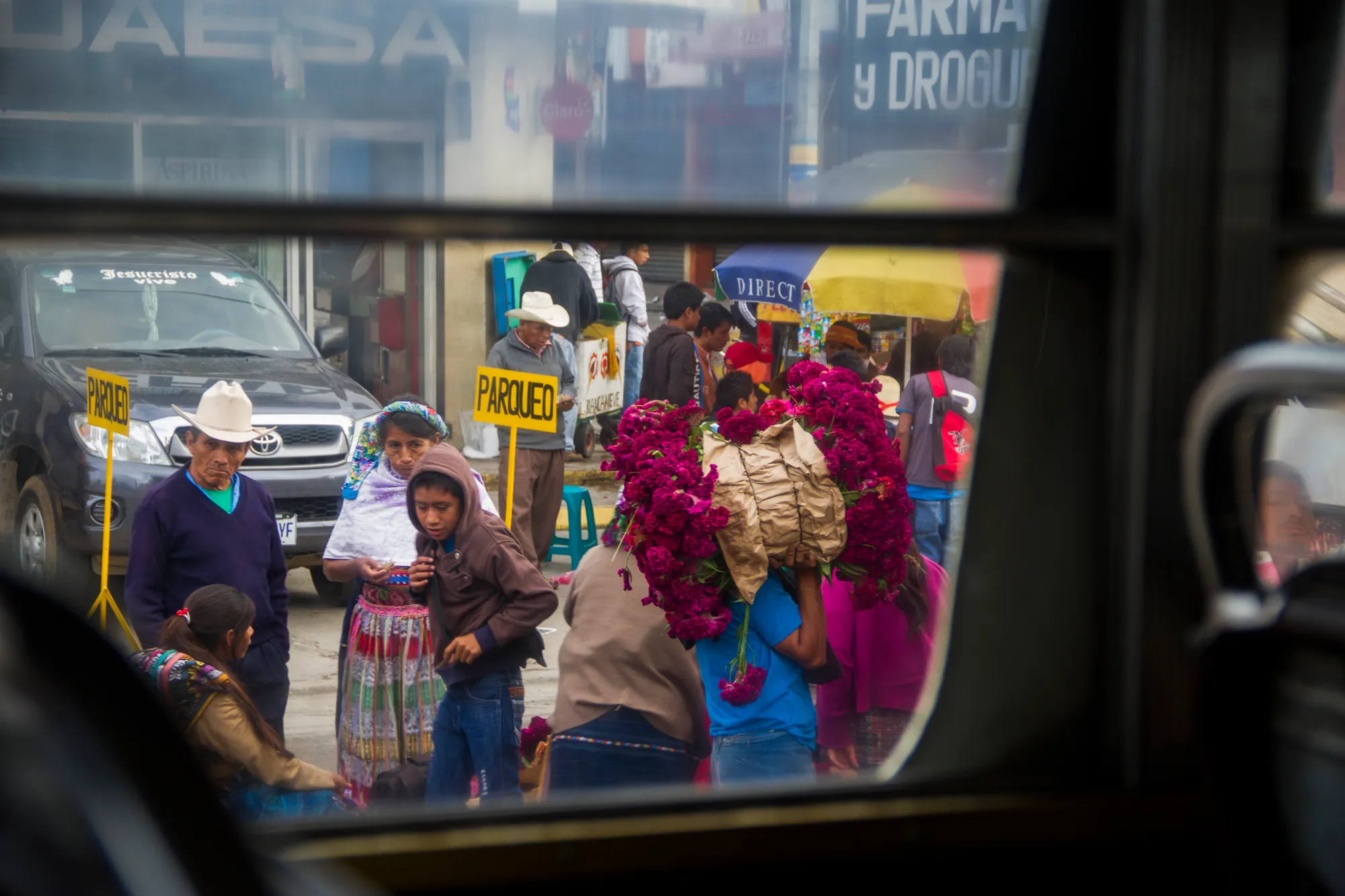
I left early on a Thursday for the mountains and the usual bus terminal market bustle was already well underway at 7 a.m. An abundance of red flowers stacked up in bundles made an odd pairing with the thick plumes of bus exhaust. They formed a super concentrated mix of good and evil, sort of like powdered lemonade.
My destination was Todos Santos Cuchumatán, a town of about 30,000 souls tucked up in a high mountain valley towards the Mexican border. The village was primed to celebrate its annual rite, a horse race, and all I knew was that the event involved lots of alcohol.
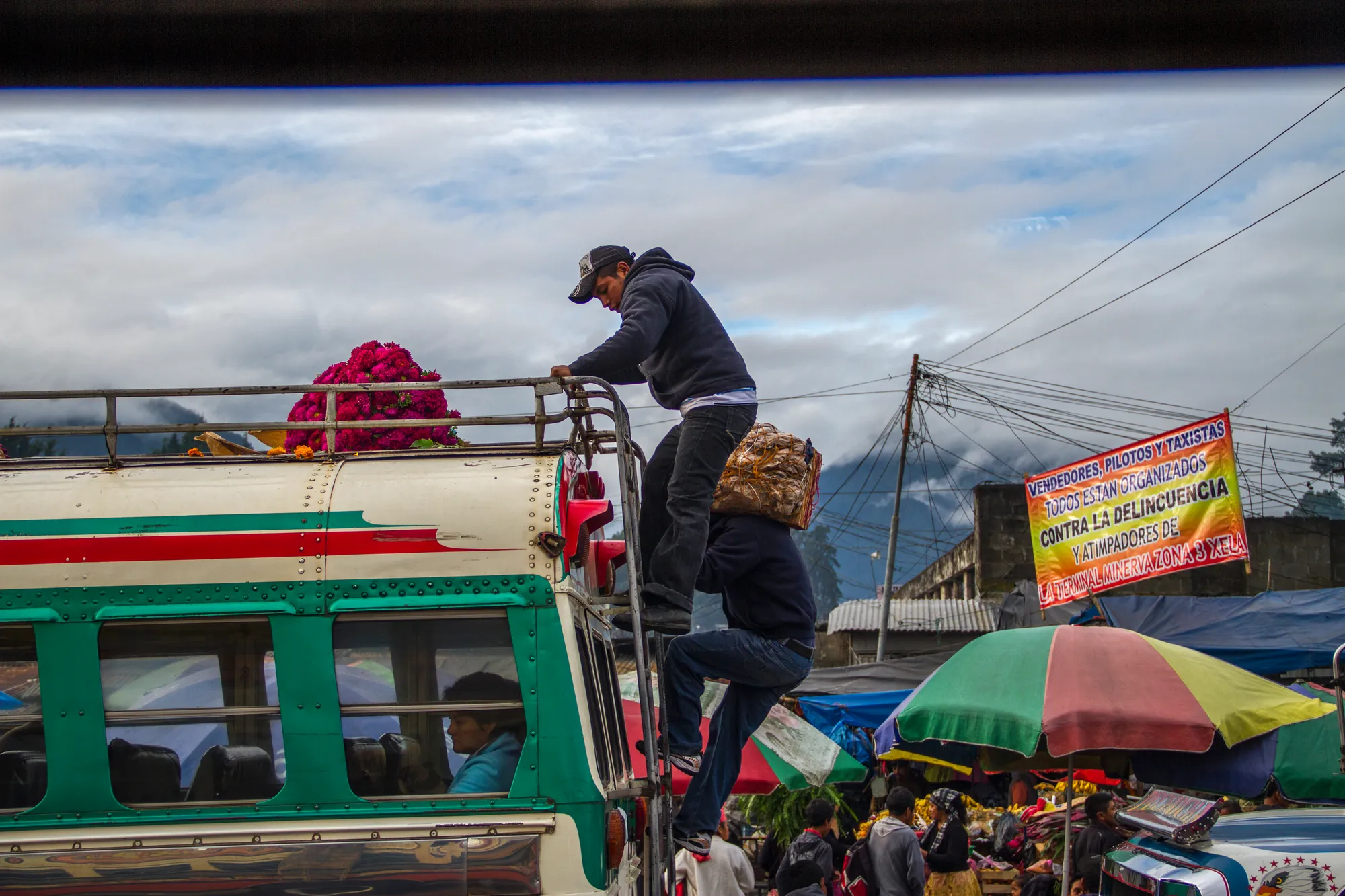
By Guatemalan standards, the bus was practically empty when I got on, but it was only about two blocks before the chaos started. The buses here are generally retired American school buses but with an added rack on top for luggage. Two-man teams pilot them: the driver drives and the helper does the acrobatics. He’s in charge of collecting fares, even if the bus is stuffed with passengers like a chile relleno — three adults on each seat and more standing, children sprinkled on laps and strapped to backs throughout. It’s also the helper’s job to climb on top of the bus while it’s barreling down the highway to prepare packages for the next stop. I saw the helper that day use an open window next to the front door as a foothold to reach the roof, but more often they pop in and out of the back door. This is what we would call the “emergency exit,” but it’s just another door here.
I looked up suddenly when I realized that we were backing up in the middle of the street, which was one of the busiest in town. Then we pulled forward, very close to another bus headed in the opposite direction. There was shouting and the bus started shaking as the helpers tossed giant bundles back and forth on the roof.
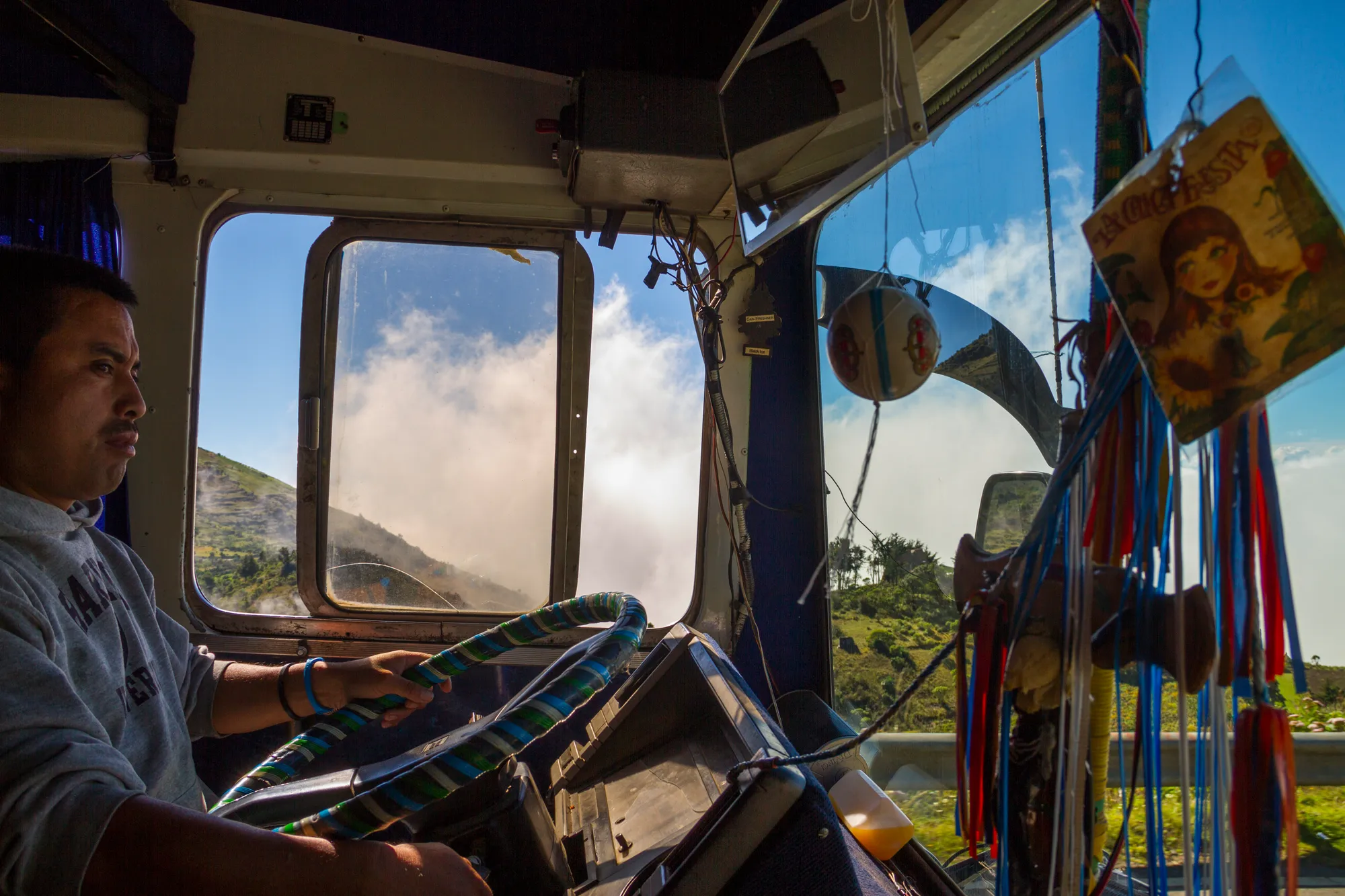
The driver was a madman. Perhaps he was trying to make up for the lack of passengers by increasing his speed. It was impossible to read with the bumps and my journal turned into a scrawl, so I sat back to watch the countryside unfold, hill after hill filled with grasses and small houses in the midst of corn fields.
These buses, like public transport everywhere, are places that quiet the most loquacious person, but I forced myself to start talking to the man sitting next to me. He lived in nearby Momostenango and carried a big bundle on his lap, which he said was full of traditional weaving that he planed to sell door to door in the next city.
It only took a minute or two before the guy in front chimed in: “A gringo?” he said with a big smile, clearly far more willing to chat than the man with the weaving. His name was Francisco and he told me that he once lived in Nashville, Tennessee, making three separate trips across the U.S.-Mexico border on foot. He had to work long hours in a restaurant kitchen in the states, but he seemed wistful for those times now. “In the U.S. we work all the time but we have money in our pockets,” he said. Now he sold used shoes and made about $4 a day.
The next bus was empty when I get on, but it quickly became remarkably crowded in true Guatemalan fashion. People ambled on, folded down seats into the aisle and slowly packed in denser and denser, like a sleeping bag being pushed into a stuff sack. As more people entered, we in the back were behind a denser and denser wall of humanity. Vendors also came on selling sandwiches, drinks, and chuchitos (the Guatemalan tamales, little packages of corn mush and a chunk of chicken, conveniently wrapped in a leaf). Money took a bumpy road forward hand over hand through the rows of seats, and the goods came back in the same manner. A man got on the bus in a suit and began speaking while the girls next to me ate their corn and chicken.
“How great it is that you’re hungry,” he said. “Once you don’t have hunger what else is there? How great is the light of the sun. How wonderful is our life.”
Just as we set off, another man climbed aboard with a stack of newspapers, also trying to rouse the sleepy multitude. I had already been offered ten different papers on the trip so far, but this guy took the approach of a modern-day newsboy. “Look! Boy drowns in river,” he said, holding up the cover with rushing water. Without any takers, he moved deeper into the paper, flipping from page to page summarizing the articles. “Look! Man dies in accident,” he said, showing off a grizzly car wreck. The newshound in me was tempted by his offer — Guatemala is a great place for sensationalism.
We proceeded at an agonizingly slow pace. First because we were on tiny streets in the city that barely fit the bus, and then because we climbed a gigantic mountain on a curvy road. At the top, we were level with the clouds and the city looked like I was viewing it from an airplane. The air was remarkably clear, rare in my experience of Guatemala so far, where I’ve been stuck in a cloud at the top of every hill.
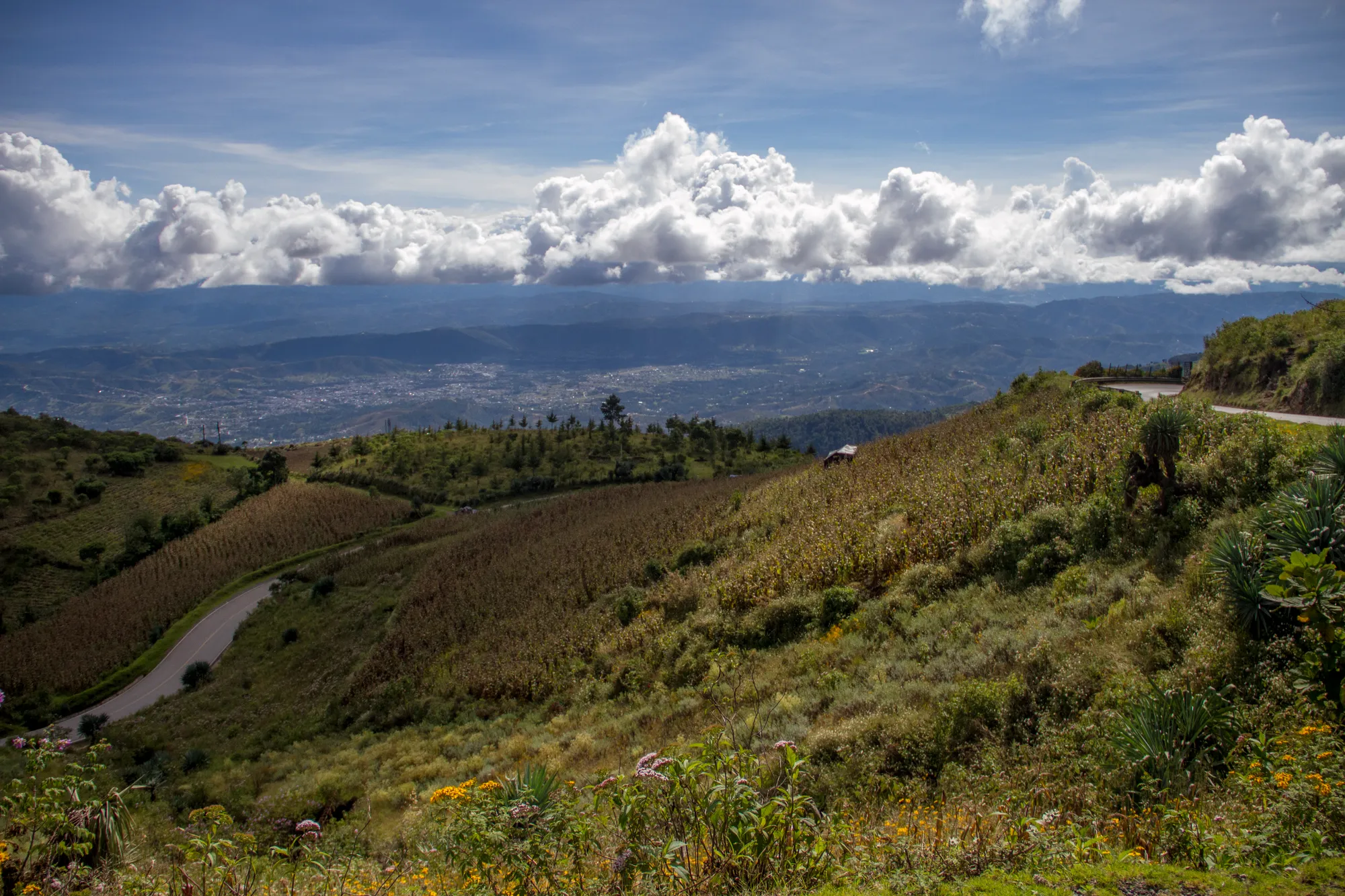
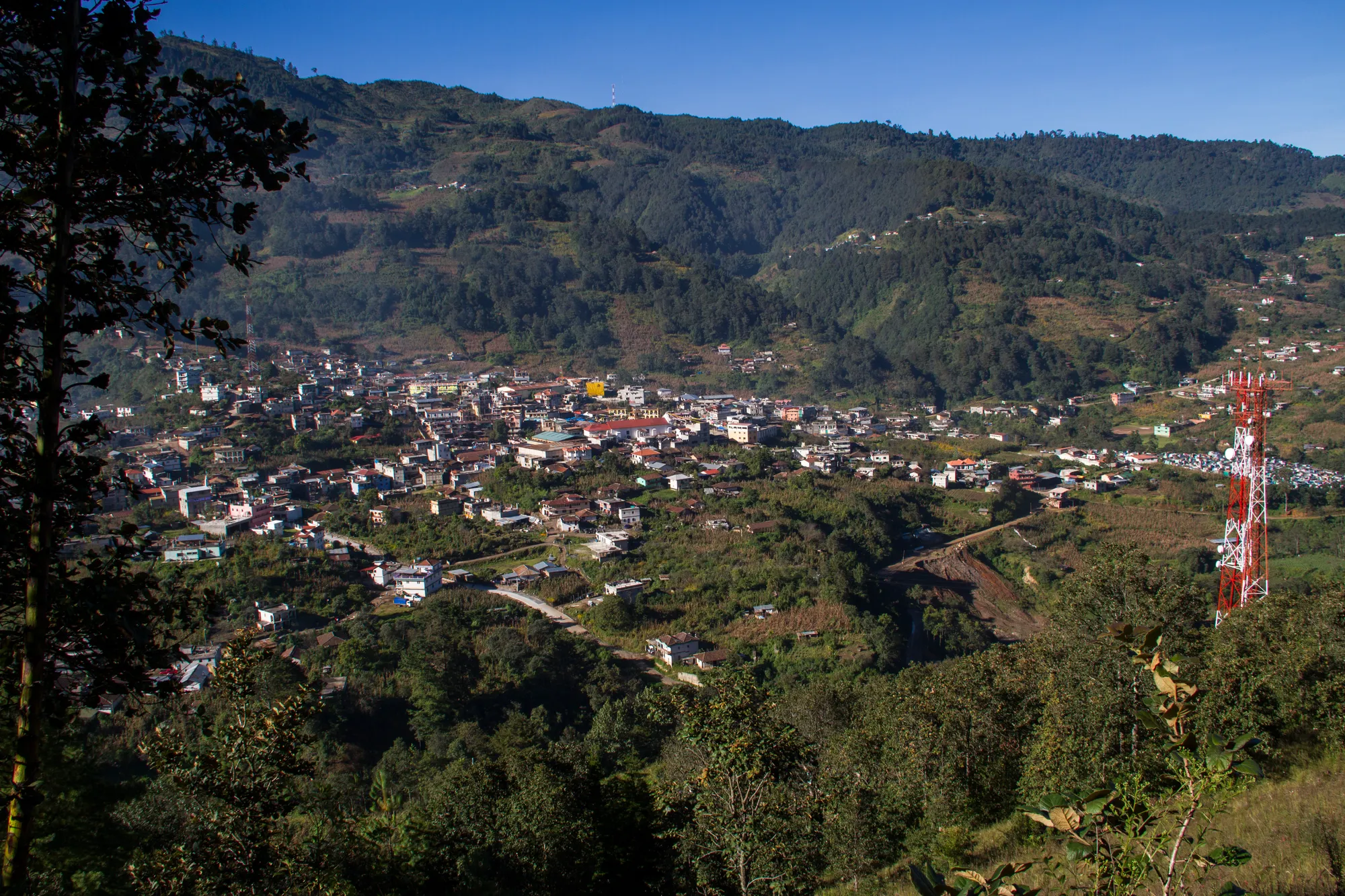
After crossing a big plateau and heading down again, we finally arrived in Todos Santos. Dramatic steep hillsides rose on either side of the town, and at the top of the valley, they broke out into outright cliffs at their peaks. The air was noticeably cooler here — and cleaner. The downtown was less than one block, just a church, a small market and a raised plaza.
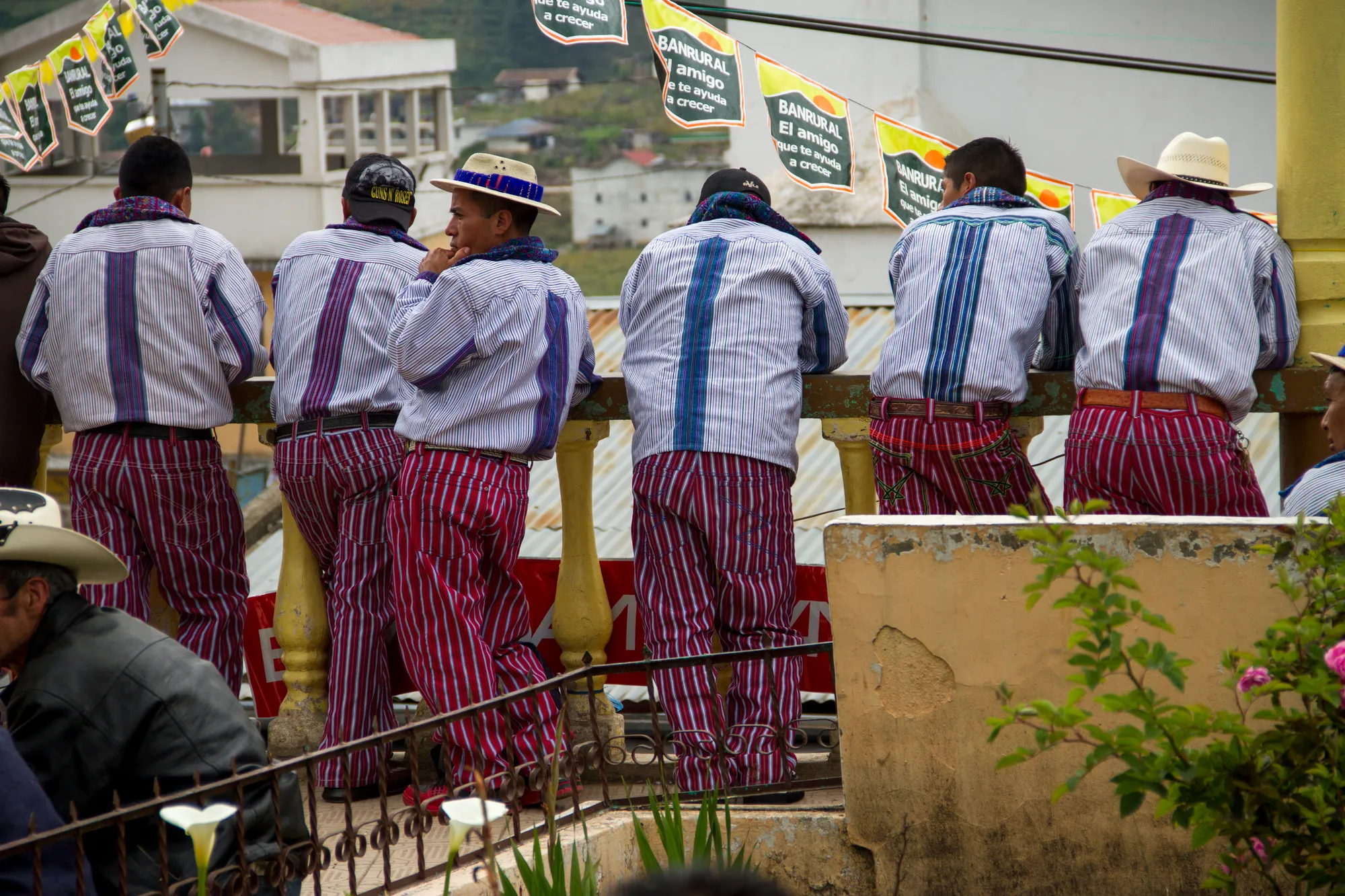
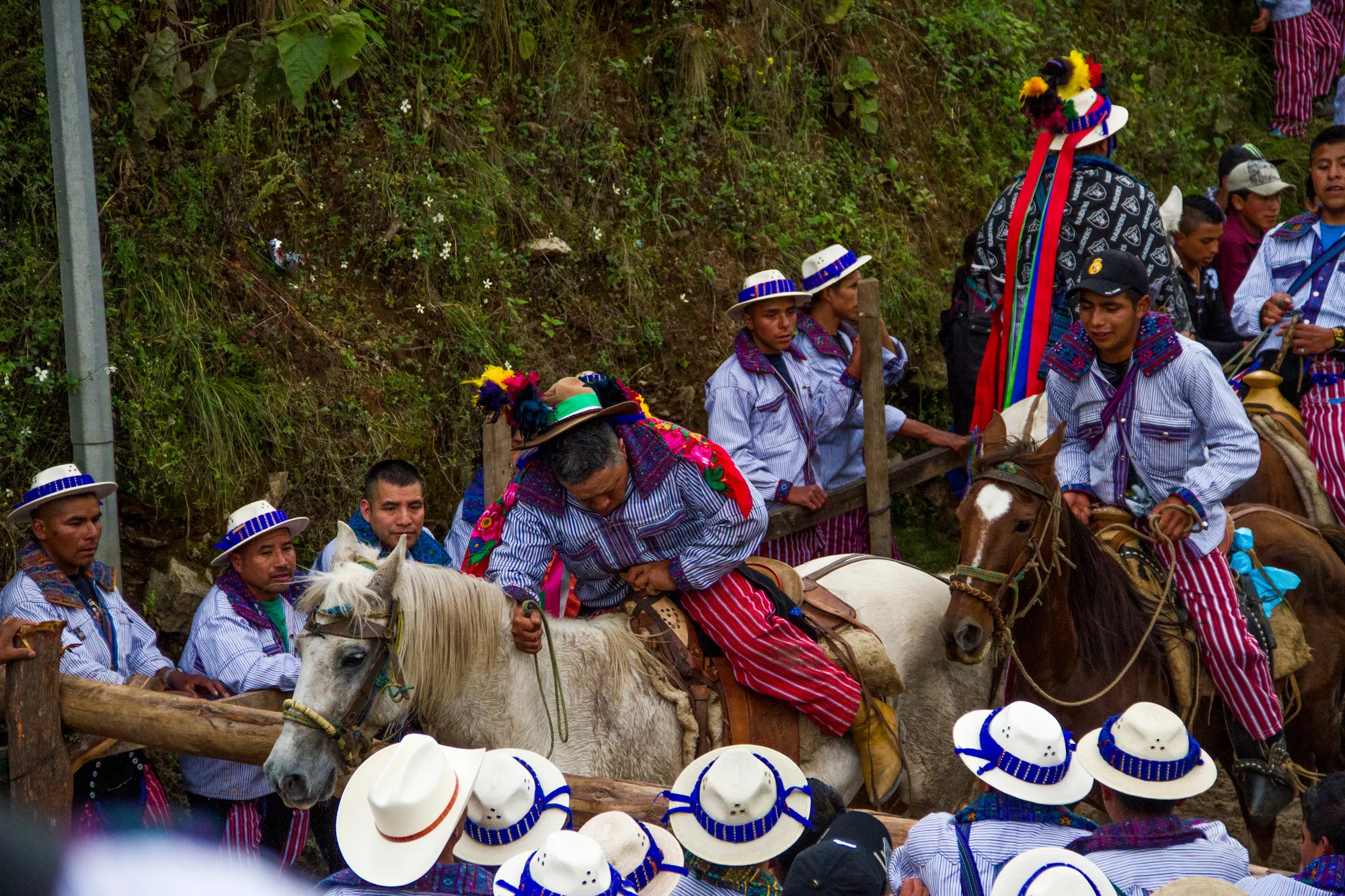
Is this the village that you visited way back when? No doubt you can probably tell from the town uniform. Todos Santos is one of the few places where everyone still wears it, although the practice was at one time standard throughout Guatemala as I understand it, with different villages sporting different suits. Here the men wear red pants with thin white stripes and a blue striped shirt. The collar is a thick multicolored woven fabric that looks quite cozy for the chilly mountain air. Some of them like to add in t-shirts with modern logos underneath, creating a strange incongruity. The cut of the pants is one of the few variations in the pattern, with the youth tending to go with huge pockets that sag well below their waists.
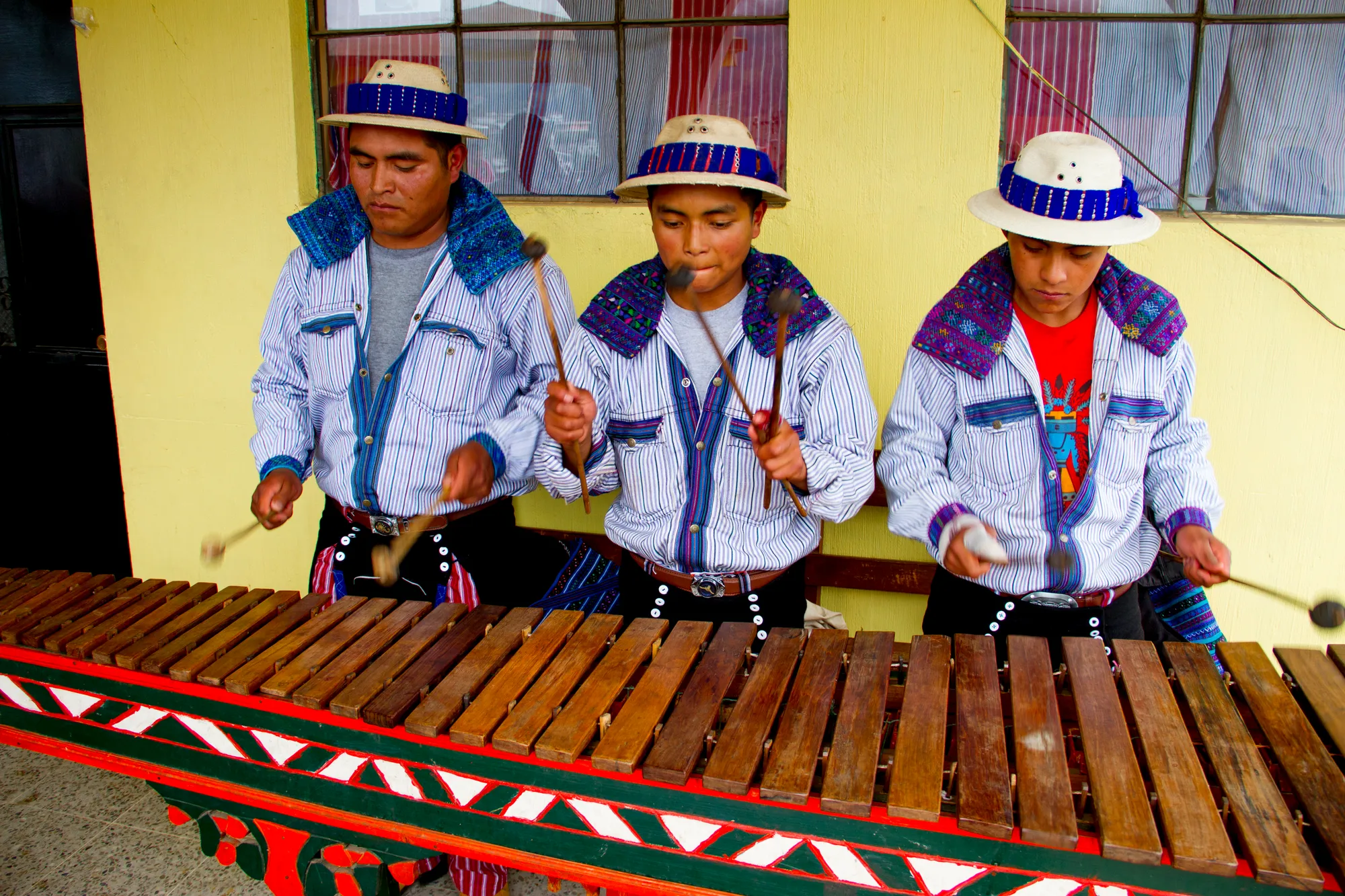
I walked toward the center, past a long line of cars backed up in the street. As I approached closer, I heard the marimba, a giant wooden xylophone-like instrument that is played by three men at once. They’ve got two or three mallets each and the keys carry big crystal-shaped resonators underneath them.
Are you able to hear the song I recorded? It should be playing over that image of the band if you’ve got your sound on and I’ve done my work on the interface correctly.
A crowd of people circled around about a dozen girls wearing crowns and sashes, one reading “Princesa Maya.” They danced very slowly, limply holding one another by the hand and hopping from foot to foot. The crowns were eclectic, with several wooden pyramids featuring birds on top.
Holy shit fireworks! That sounded like dynamite. I was about 30 feet away and my ears hurt. But no one seemed fazed at all... least of all the cops that loitered in front of their police station right next to me. A thick cloud of smoke wafted into the dance floor obscuring the sash girls.
Oddly, there was zero applause when the song finished. I wanted to clap, but it would have been so horribly awkward. I was the sole tourist there.
In the evening, I headed out to watch the crowning of the village queen in the municipal hall, a big gymnasium-like space with yellow cinderblock walls and terrible acoustics. A stage with a fake church and grass on the floor made it feel like a nativity play or a square dance. People thronged the entrance, but were hesitant to move beyond it, as if they couldn’t quite commit. I pushed through the crowd to the mostly empty bleachers.
The sash girls from earlier beamed across the room from a video projected on the opposite wall. They were introducing themselves and smiling for the camera and I realized, of course, that these were the would-be queens. It was a constant stream of babble from the stage and I decided to split.
I wandered out into the narrow fair street, full of small shops, arcade games and food venders on a steep incline. At the end, I heard marimba music and followed three guys walking into a dark dirt driveway. Different packs of men crowded around drinking, facing a small covered area where the marimba band played for a half dozen dancers. The dancers were all male as well and their movement appeared to have even less of a pattern than the sash girls. The men just swirled in happy, drunk circles, bumping in to each other and howling like yipping coyotes.
A thick man with bulbous features named Santiago introduced himself and told me about his life in Grand Rapids, Michigan. This was starting to become a familiar story that would be repeated yet again: men heading to the United States for a period of back-breaking work, then returning to the village only to dream of the money they could be making up North. He told me that the yard was owned by one of the captains of the horse teams set to race on Friday.
I asked if he was going to race a horse and he dismissed the notion: “It’s too dangerous,” he said. “It’s crazy what they do.”
His brother came over to give us more beer, which Santiago downed with amazing speed. A group of children stood on hand with their mother, one of the few women present, and as soon as anyone threw down an empty can or bottle, one of the kids scampered over to collect it. I cringed over the example we were setting, but the situation was clearly beyond my control.
I lost Santiago shortly after a follow-up beer run, but as I walked closer to the dance floor, I was quickly adopted by Valentine, who was just as drunk and much more excited about dancing. He grabbed my hand and we whirled around, stumbling over each other and crashing into other men. Valentine kept up a steady roll of enthusiastic interjections, like “I like this beer” and “You like it here right now?”
On my way home, I decided to check out what was happening in the coronation ceremony. What had started as a somewhat demure event had devolved into chaos. All the chairs were askew and kids were running everywhere, picking up piles of grass and throwing them or rubbing them on each others’ heads. And the audience seemed to have lost patience, leaving people talking amongst themselves. On stage, things were coming to a climax as one of the girls knelt on the floor and accepted the sash of victory. She wore a sparkly crown, more western-looking than the bird or pyramid ones I saw earlier. As she delivered her acceptance speech, fireworks went off right next to the building and sparks spilled in through the open eaves.
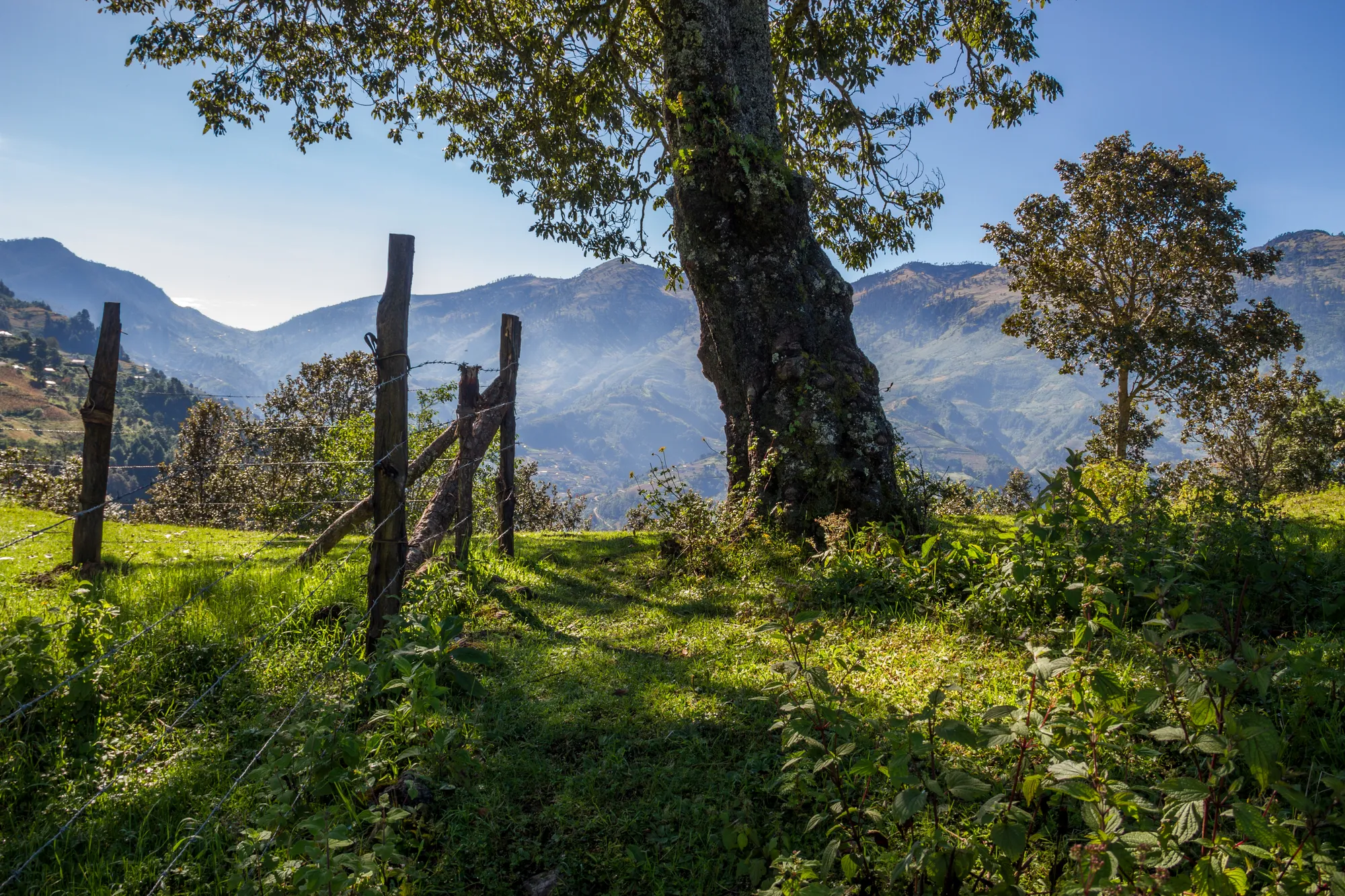
The next morning, I took to the hills early for a hike. A man with a giant axe and a machete slung from his belt nicely confirmed I was on the right path. His accoutrements appeared threatening, but his smile was as disarming as the three kids and a puppy that trailed him.
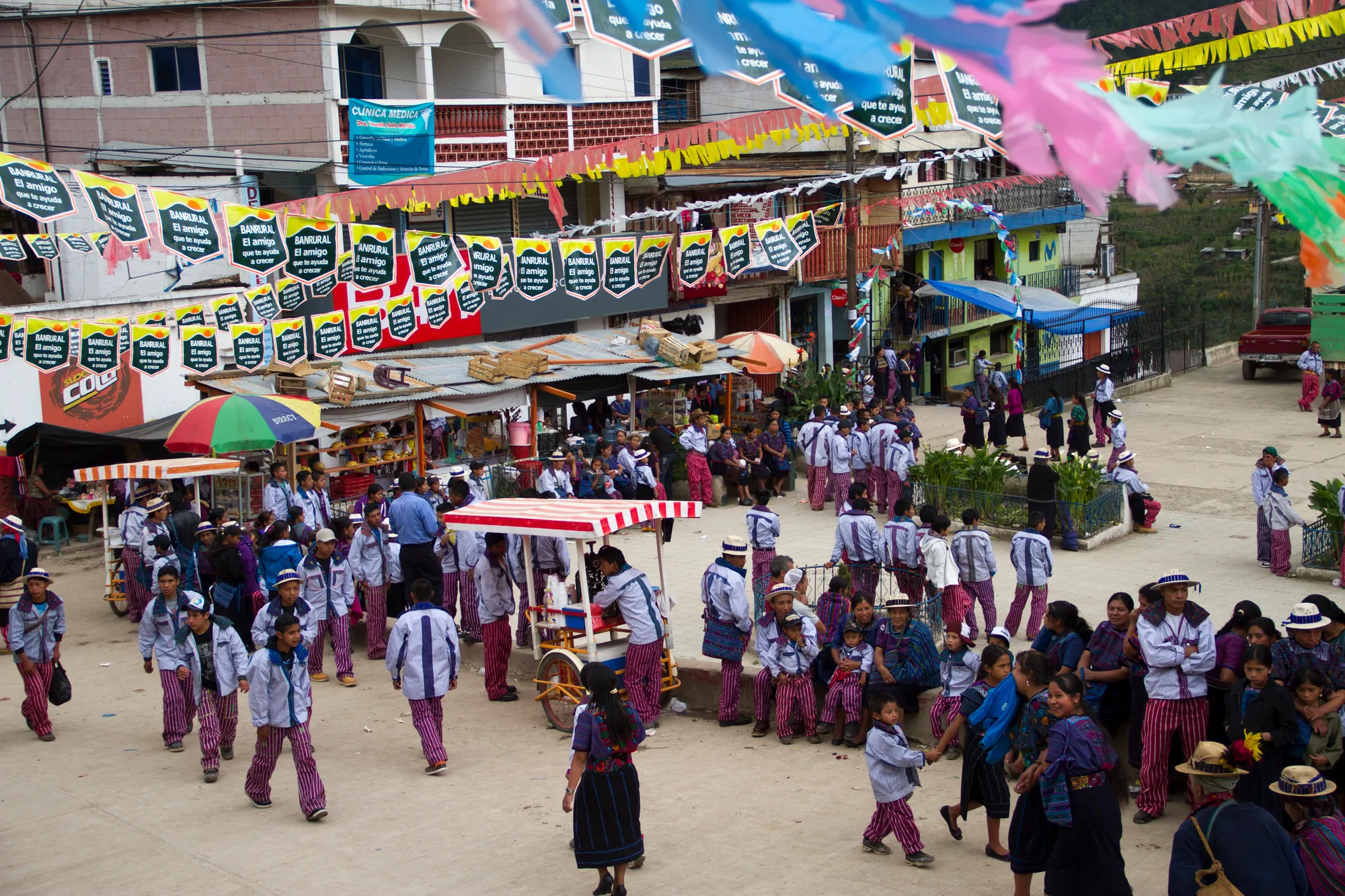
At the first vista at 8:20am it was clear that the town was already awake and continuing the party. I could hear multiple marimba bands, motorcycles, dogs, roosters, an unintelligible man on a loudspeaker, even the occasional sheep. And more fireworks—the Todosanteros clearly prefer the explosive aspect of fireworks because they use them all day long and never bother with any colors. From up top, I could hear the booms echoing in the hills for 5 seconds at a time.
Back in town, I went to one of the two recommended restaurants. As I entered, a horribly drunk guy of about 30 asked where I wanted to sit. He showed me the roof as a possible location, but there were no tables or chairs up there. I opted for the patio with a view of the market and the plaza. The drunk man talked, or rather slurred his words, at length with the Guatemalan family at the next table. When one of his young female relatives brought a notebook to take their order, he grabbed it from her and stood there swaying back and forth while not writing anything down.
When the family left, he turned his full attention to me, insisting that I drink a beer with him.
“We are friends,” he said with wet lips. “Have a beer, just one more. Let’s go.”
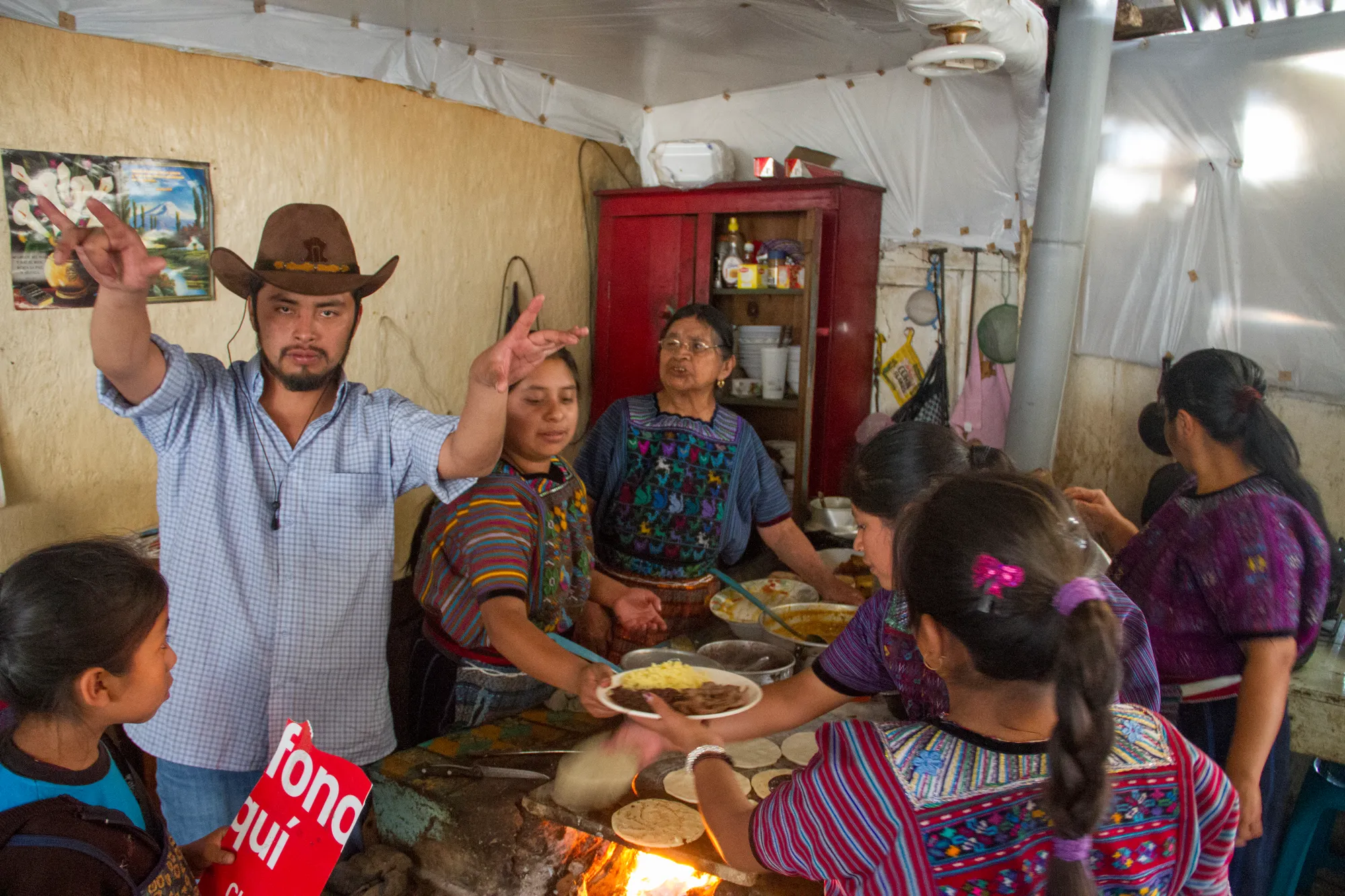
Alex thought I resembled John Lennon and he repeated that fact to me over and over. I agreed to the beer (there really was no option) and asked if he’d let me take his picture. He gladly accepted, but quickly decided it was also time to urinate on a wood pile next to some nearby tables. He insisted on taking the picture indoors, so we could include his grandmother, who kept berating him in Mam, the local indigenous language. When I went to leave, she had to hold him back against a wall so he wouldn’t follow me. You can see her in the picture scowling in the background.
The experience at my hotel was proving just as surreal. It had no sign at all, making it somewhat difficult to locate (in addition to the fact no one had heard of it). To enter the front door, I was instructed to reach my hand through a window, and the day I arrived, the door was also covered in wet paint, which coated my hands with bits of green. The toilets had no seats despite the fact that the family running the place also owned a hardware store on the bottom floor, which presumably would have carried such an item. And finally, my room was not quite square—it was somewhat close but really none of the walls were parallel and none of the corners were 90 degrees.
I could tell from the ever present yipping that the men were dancing marimba with even more vigor than the night before, but I opted to give myself a rest.
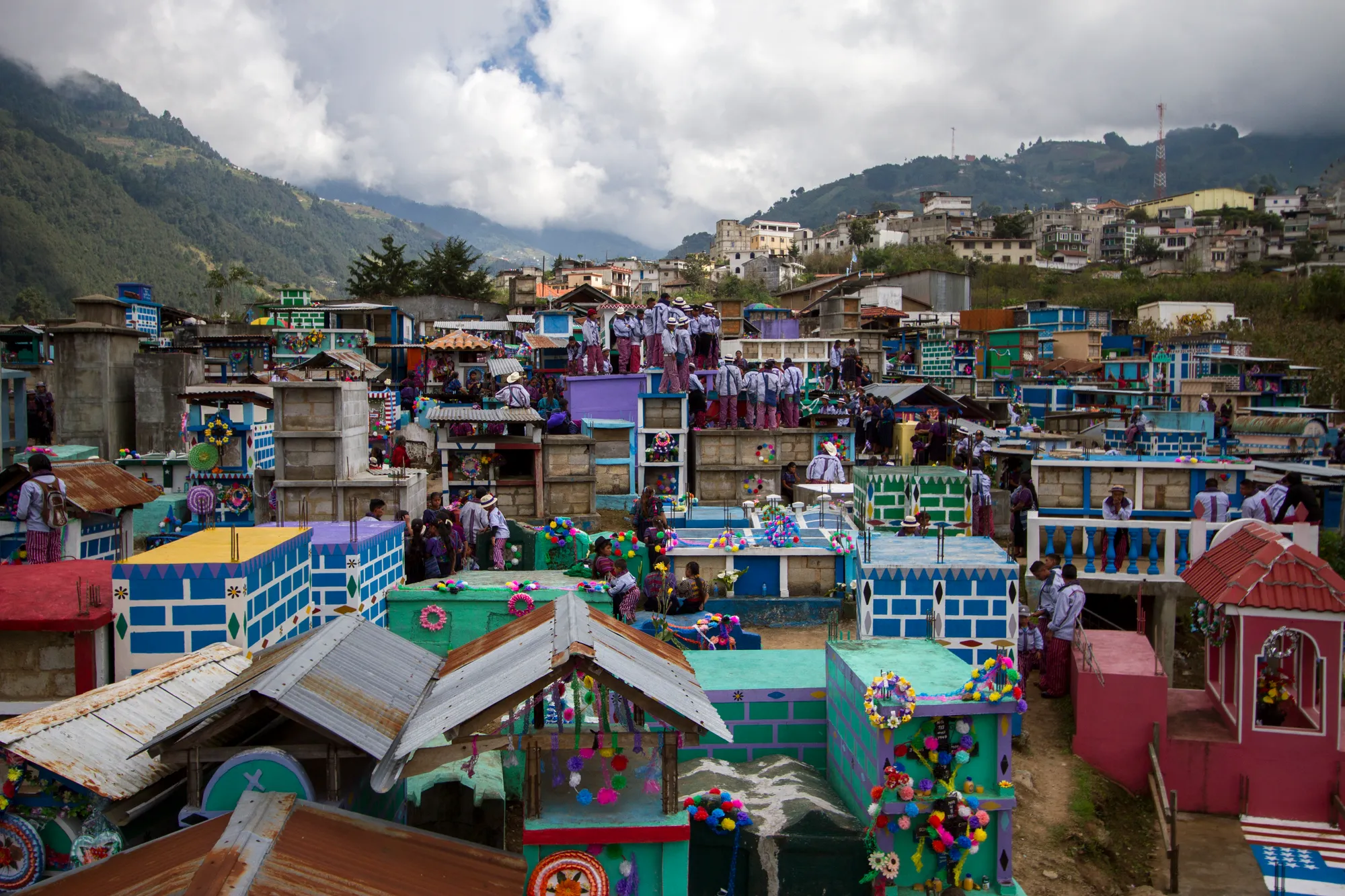
At 11am, I passed six guys who were passed out in the main street. One man was sitting with his eyes closed, and after I passed him, I heard a loud clang and looked back to see that he’d fallen backward and hit a sign post. He was still unconscious and slumped over, but a kid had come to his rescue, tickling his cheek.
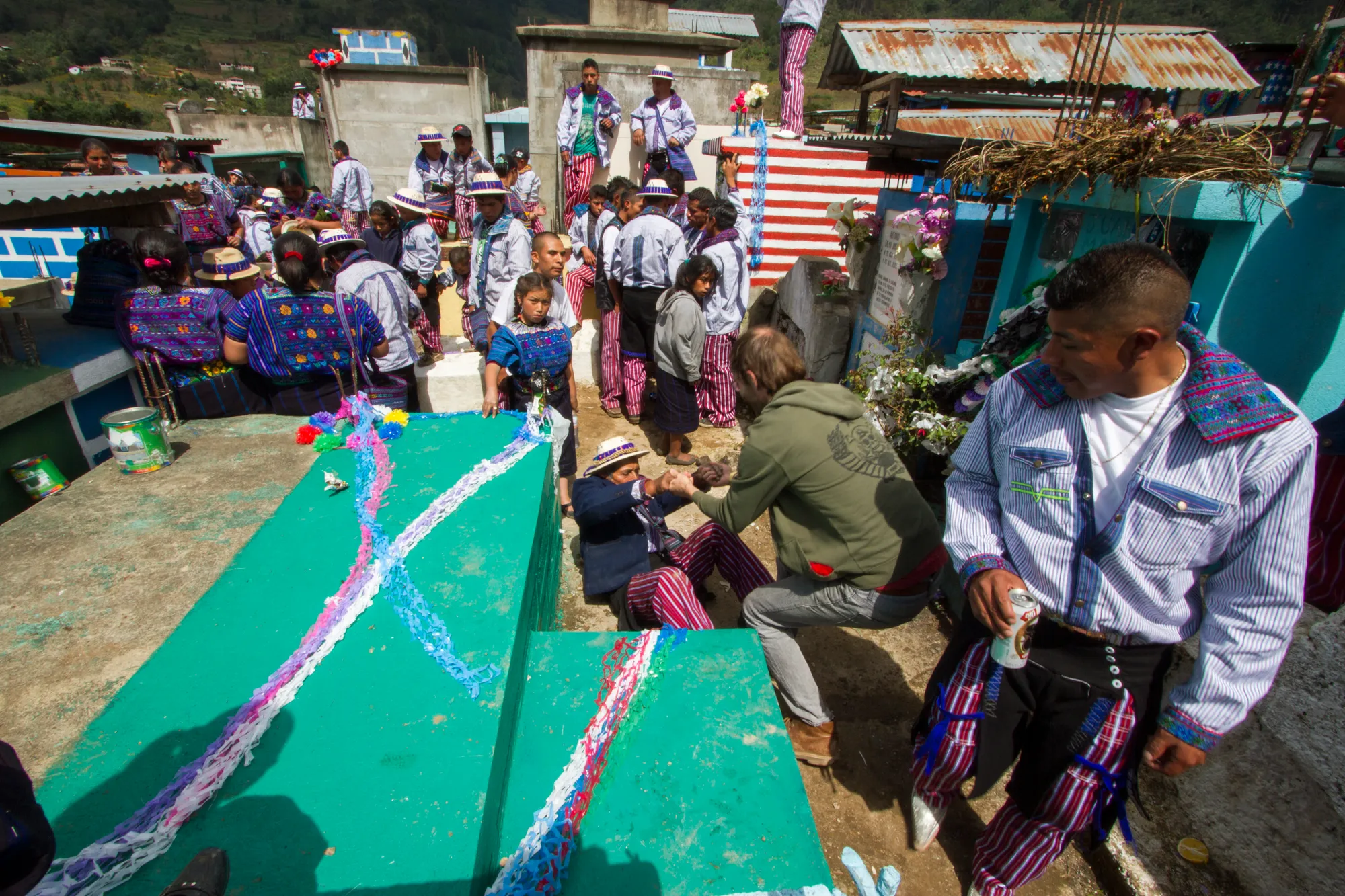
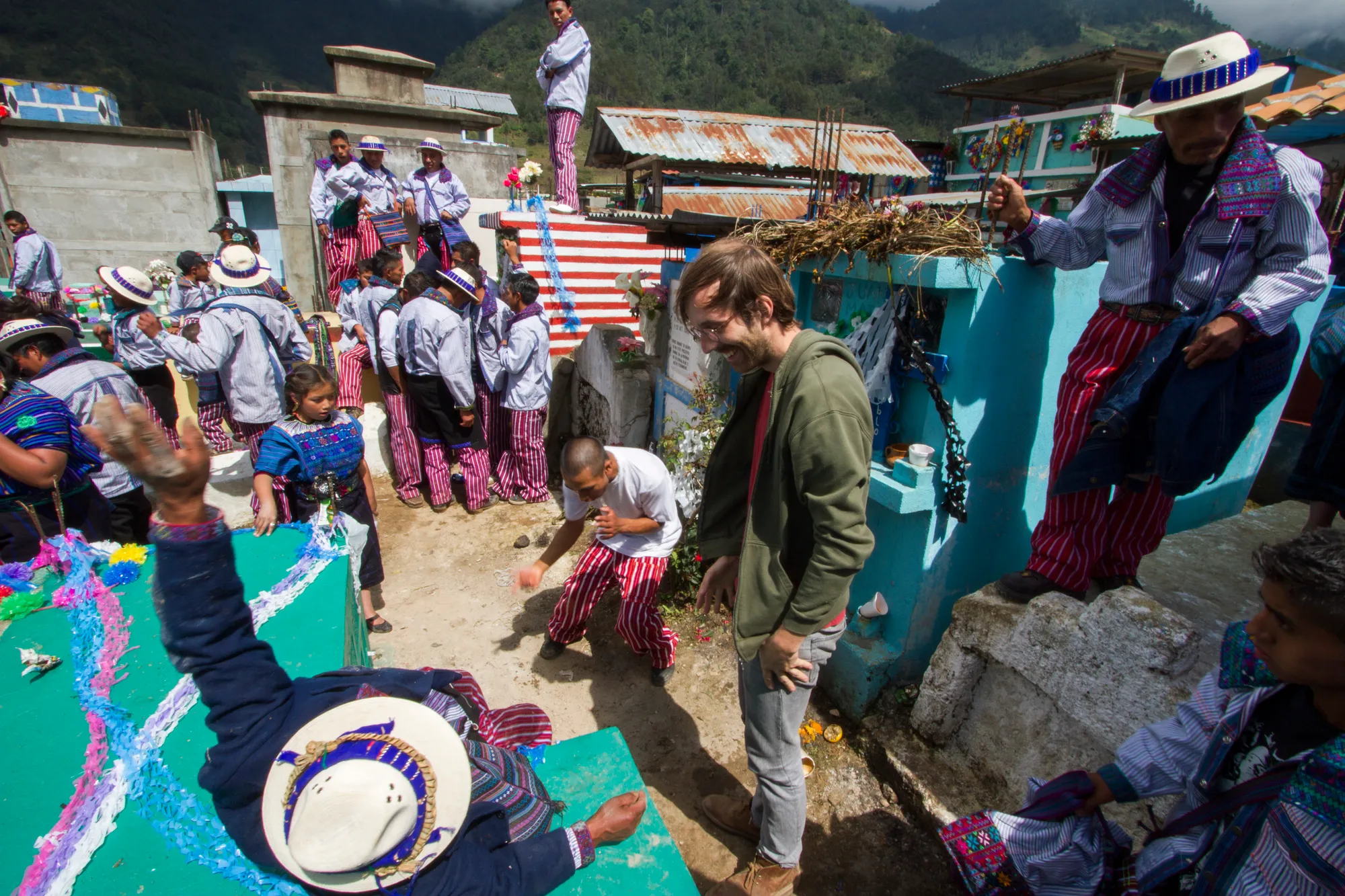
The action had shifted to the cemetery for the Day of the Dead. It was more alcohol and more marimba, this time mixed with grief and crammed between graves.
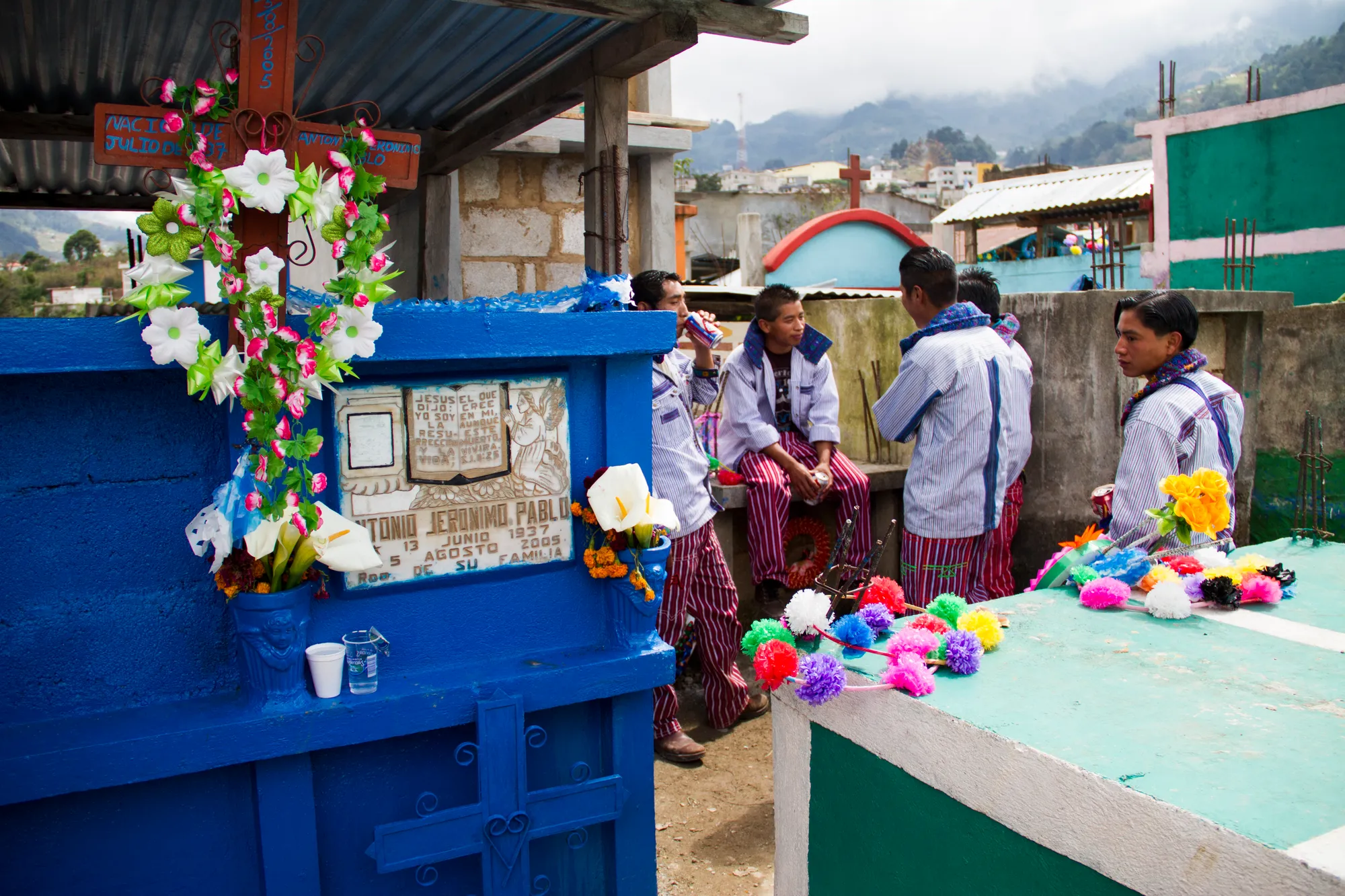
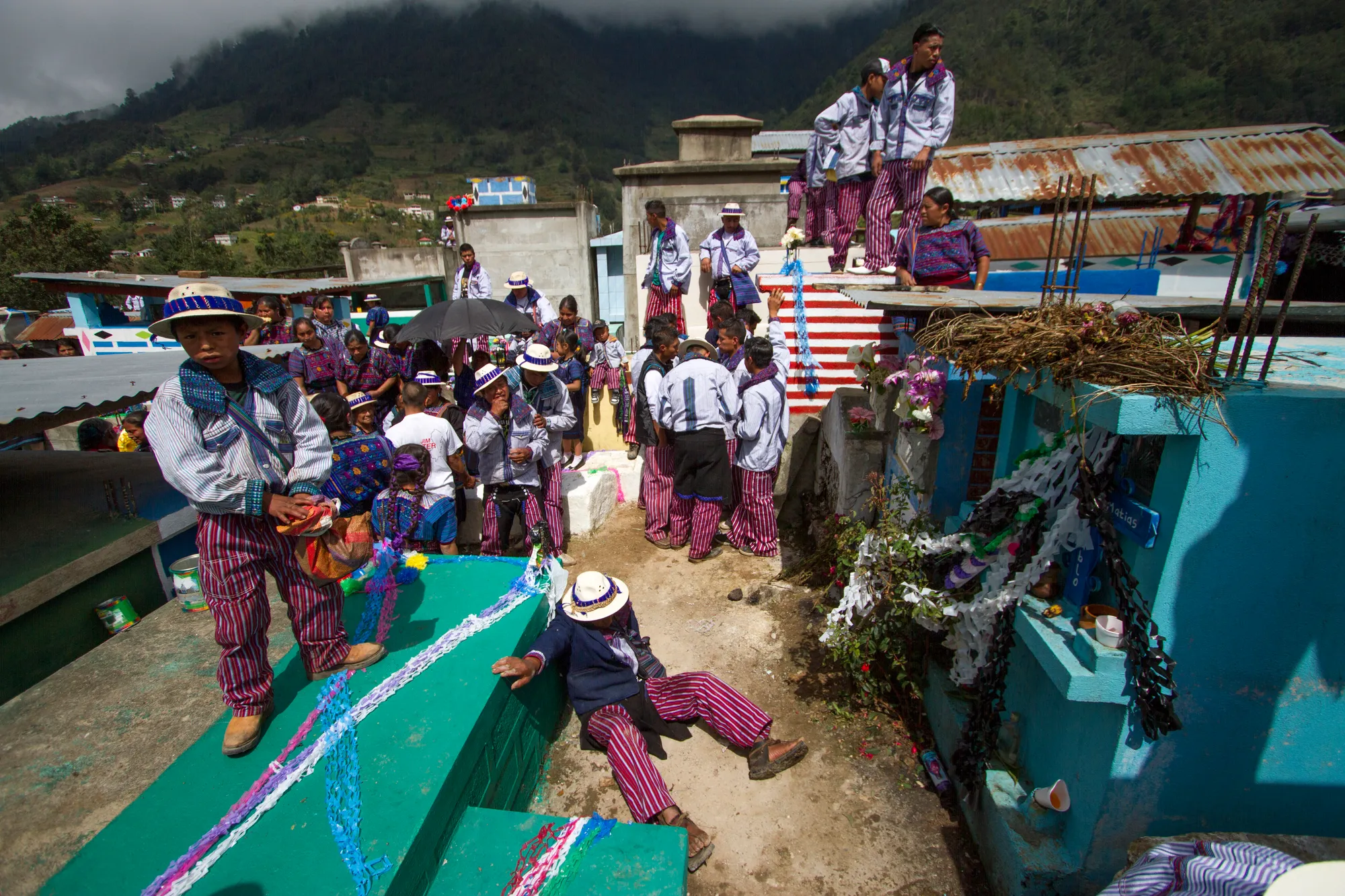
The cemetery in Todos Santos is above ground, the concrete tombs piled on top of each other all catawampus and painted in garish shades of blue, red, teal, orange and green. Many had rebar sticking up out of the top, ready to build up for the next generation. That also provided a nice hold for climbing, which was essential because people were everywhere, especially gathered in front of a marimba. The most hopelessly drunk tended to hold ground near the front for dancing, while others formed a ring around the edges to gawk.
The mountains behind were covered in sun spots and low clouds, but the sky overhead was mostly clear and the temperature was just right, warm when it was sunny and pleasantly cool in the shade of a passing cloud.
Families left styrofoam wreaths, fake flowers, half-eaten oranges and open cans of soda or juice on the graves. Candles turned the ground black as they burned. Ladies were selling sandwiches, chuchitos and gum. People and their kids covered every foot of ground, squeezing through narrow crannies in long lines. And of course more loud fireworks came from all angles.
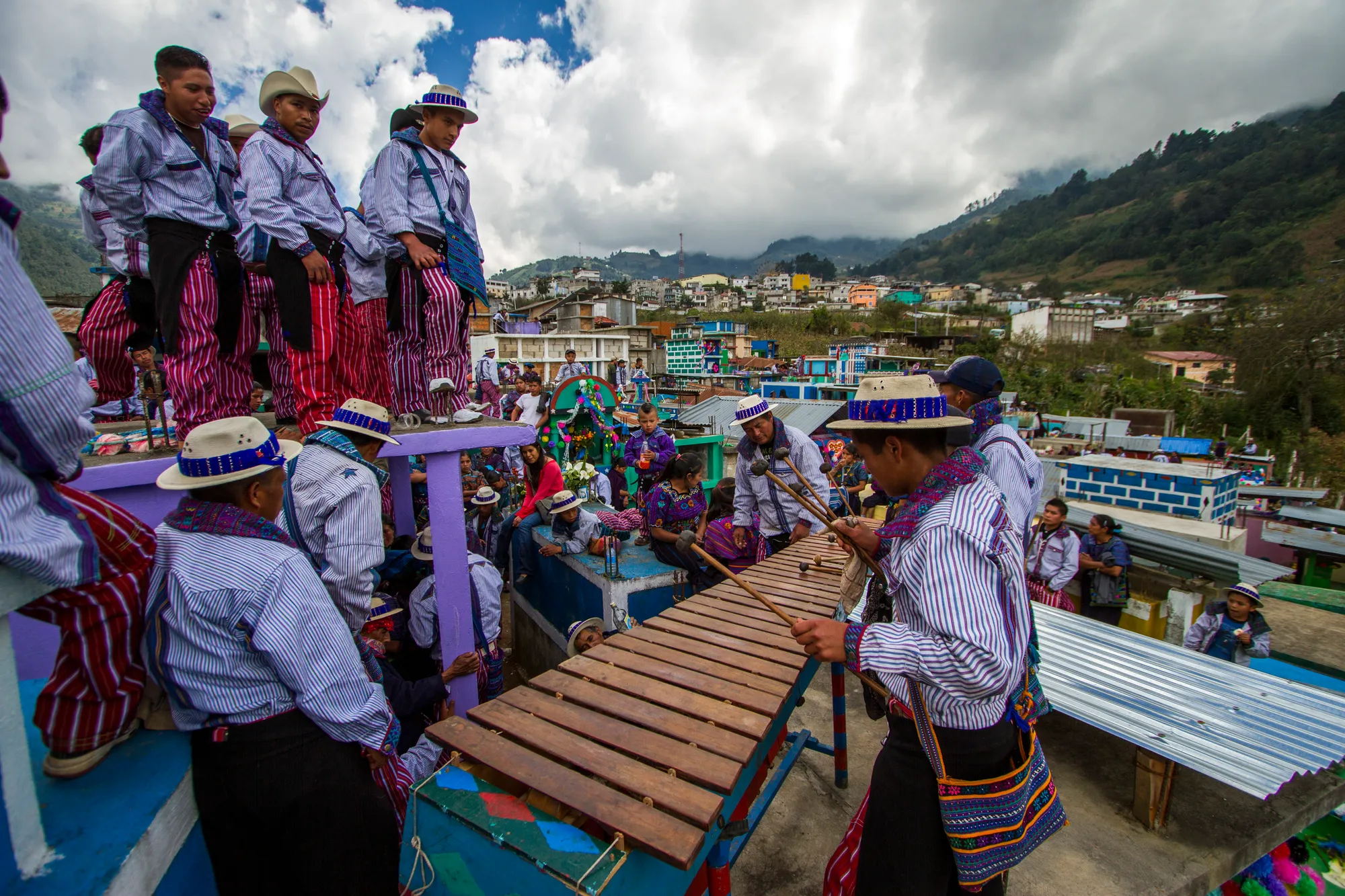
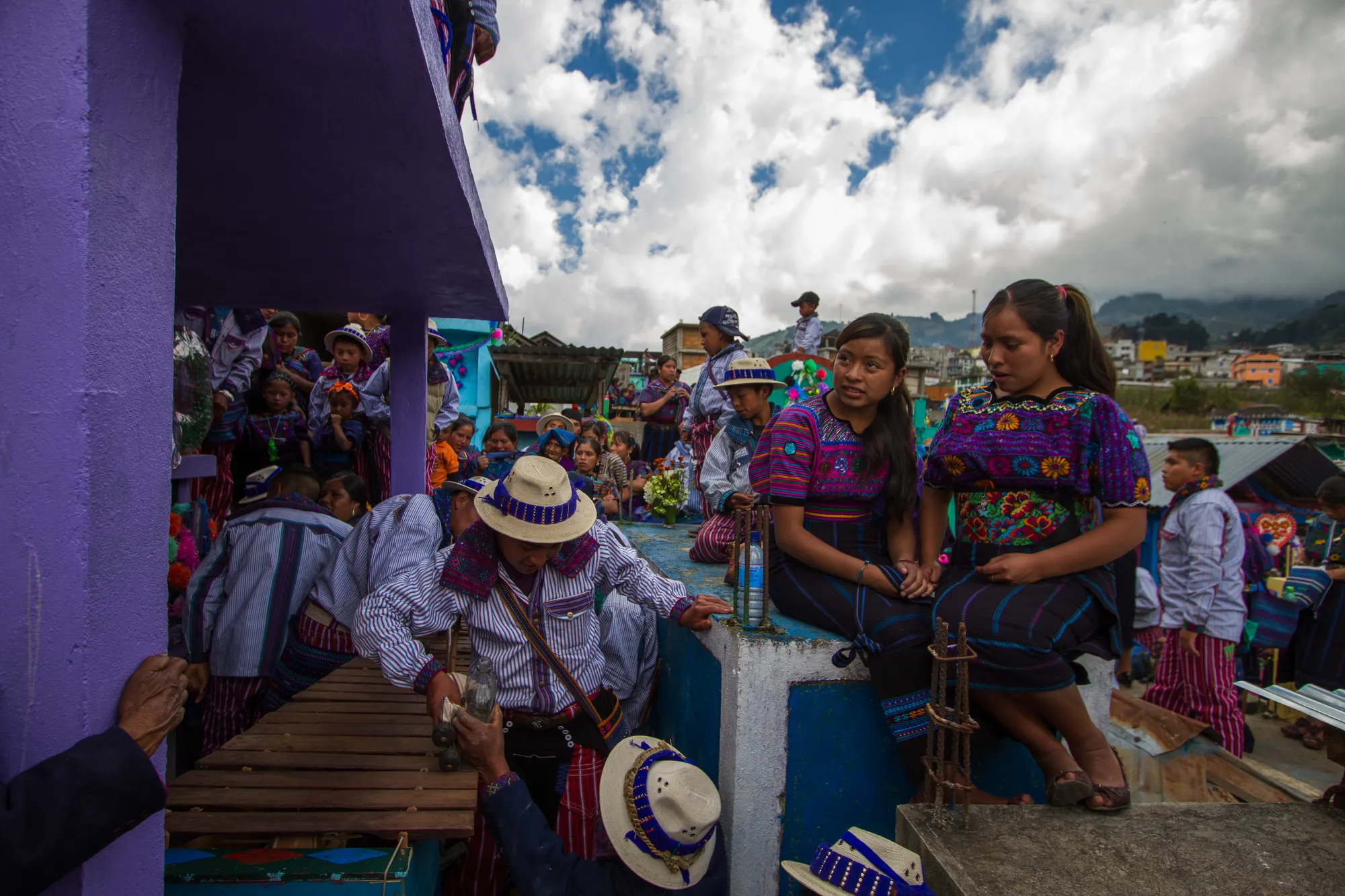
It took a few false starts to find a path into the heart of the one of the many marimba shows. The players moved the marimba after every song and I followed to an even more cramped spot. There was a drunk old man with a giant bottle of aguardiente grain alcohol in his hand who couldn’t stand up by himself. I bent down to help him and he offered his hands, clearly grateful but only capable of moaning in response. I was able to lift him, but he couldn’t actually keep himself upright and just plopped over on the next grave.
The band settled in front of a lady who had been mourning with a beer in her hand and she joined the dance, clearly distraught for her deceased relatives. The next move of the marimba was to the grave I was standing on and I quickly become a participant by grabbing one end of the giant instrument, to much thanks from the locals.
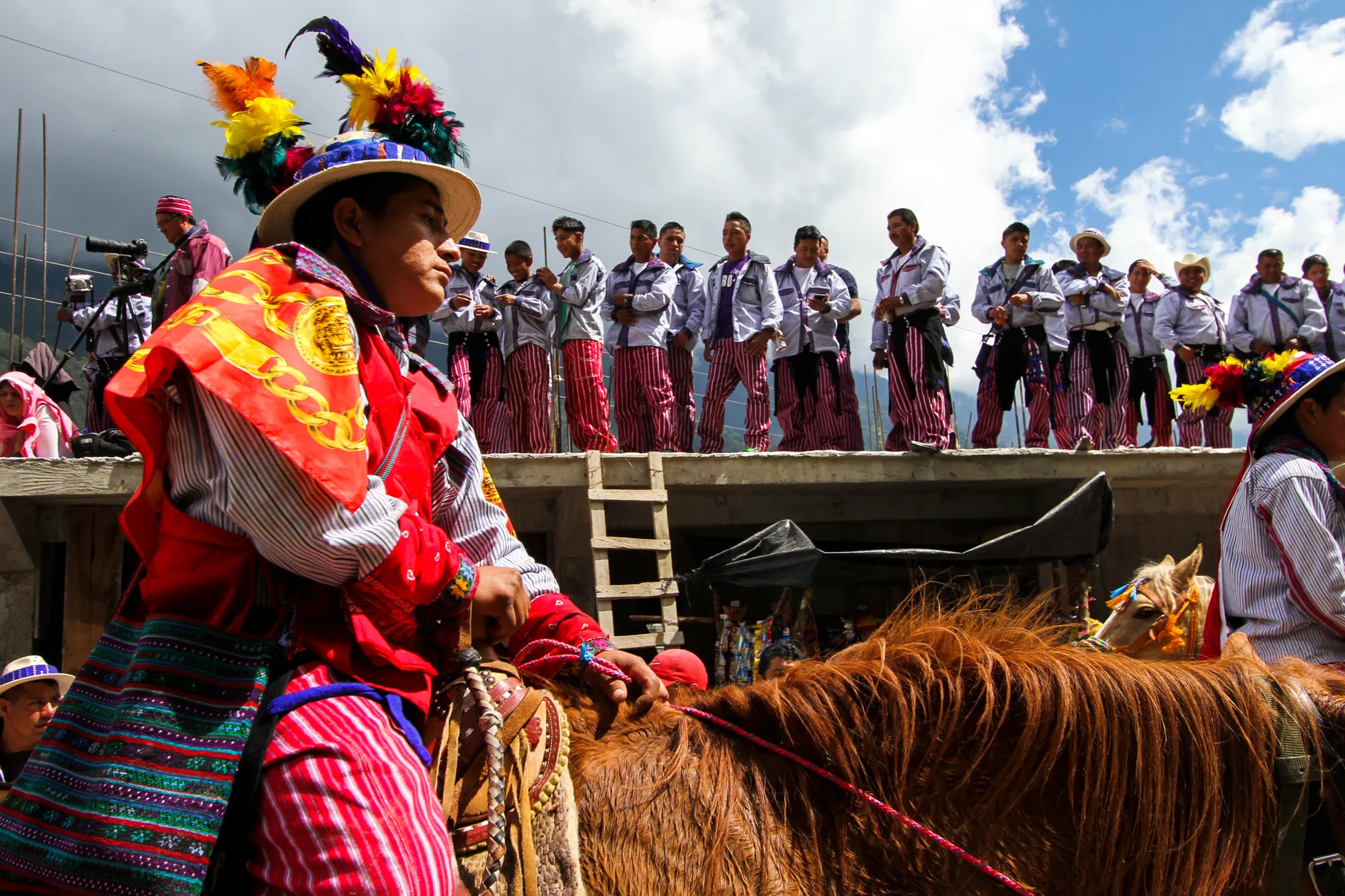
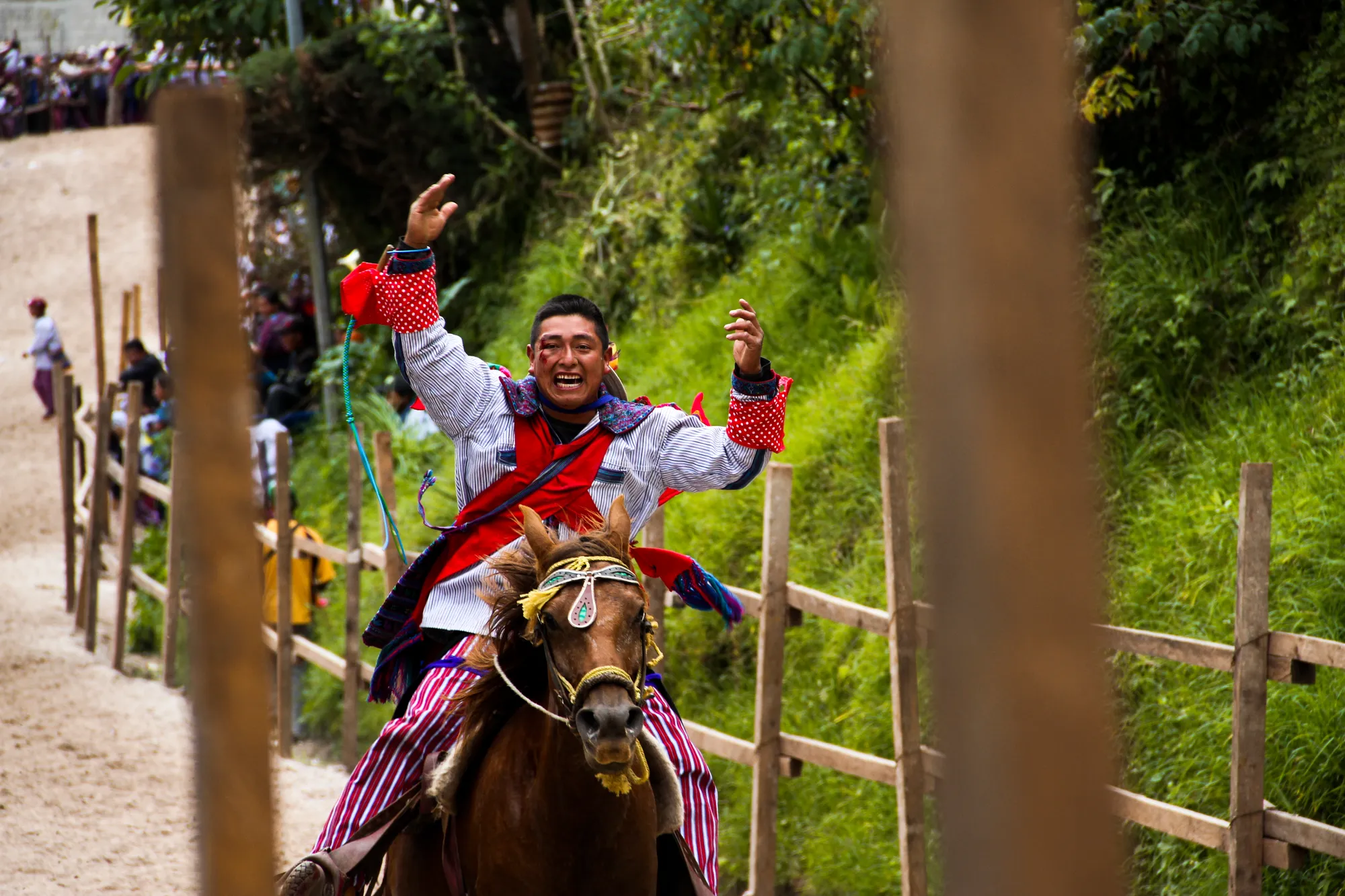
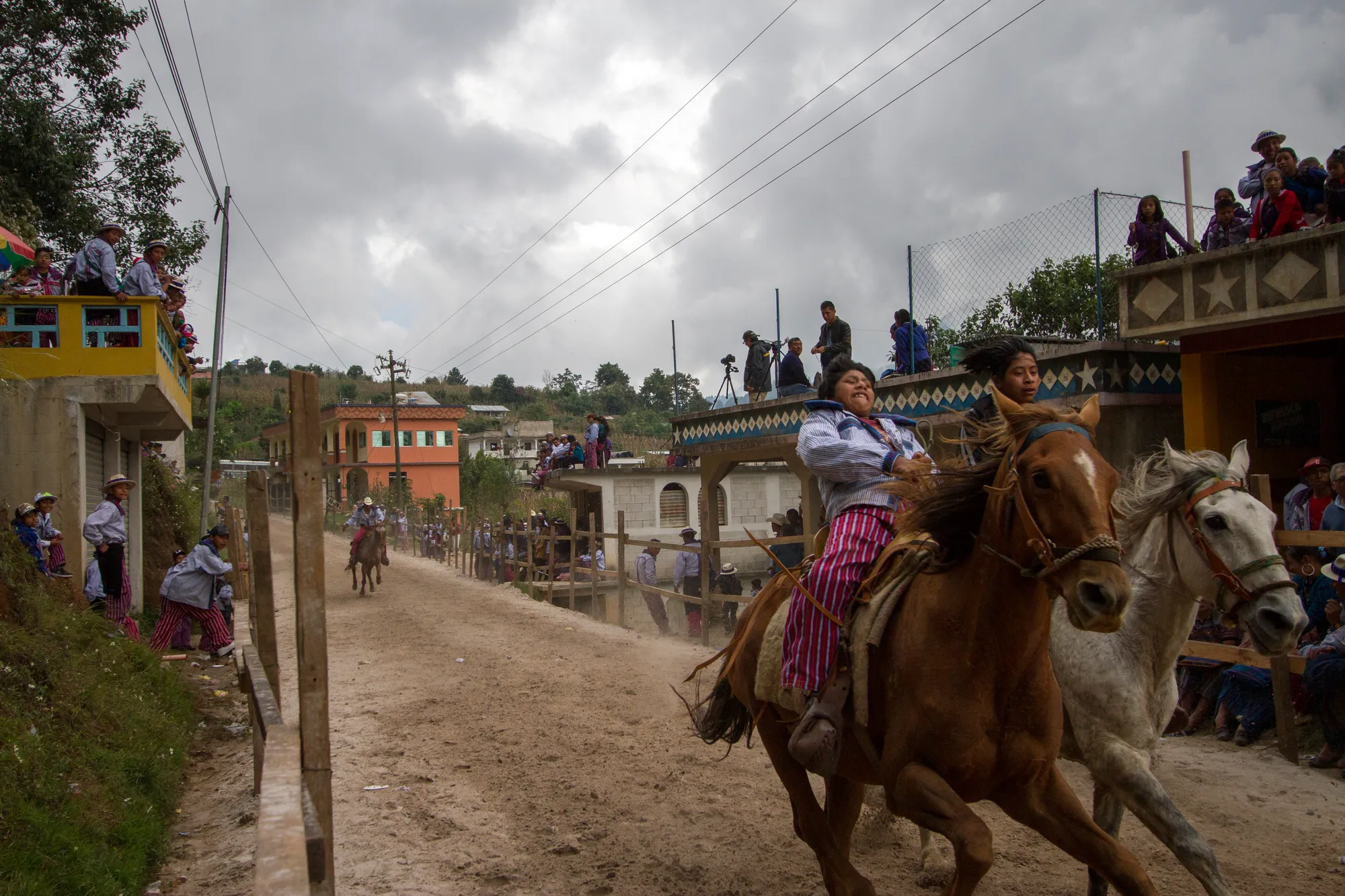
Race day. I use the word “race” lightly because it was not really a race at all. The track, a slightly curved stretch of road covered in sand, was only the length of a long city block. And it must be noted right now that the riders were completely, utterly drunk, making any notion of a race doubly impossible.
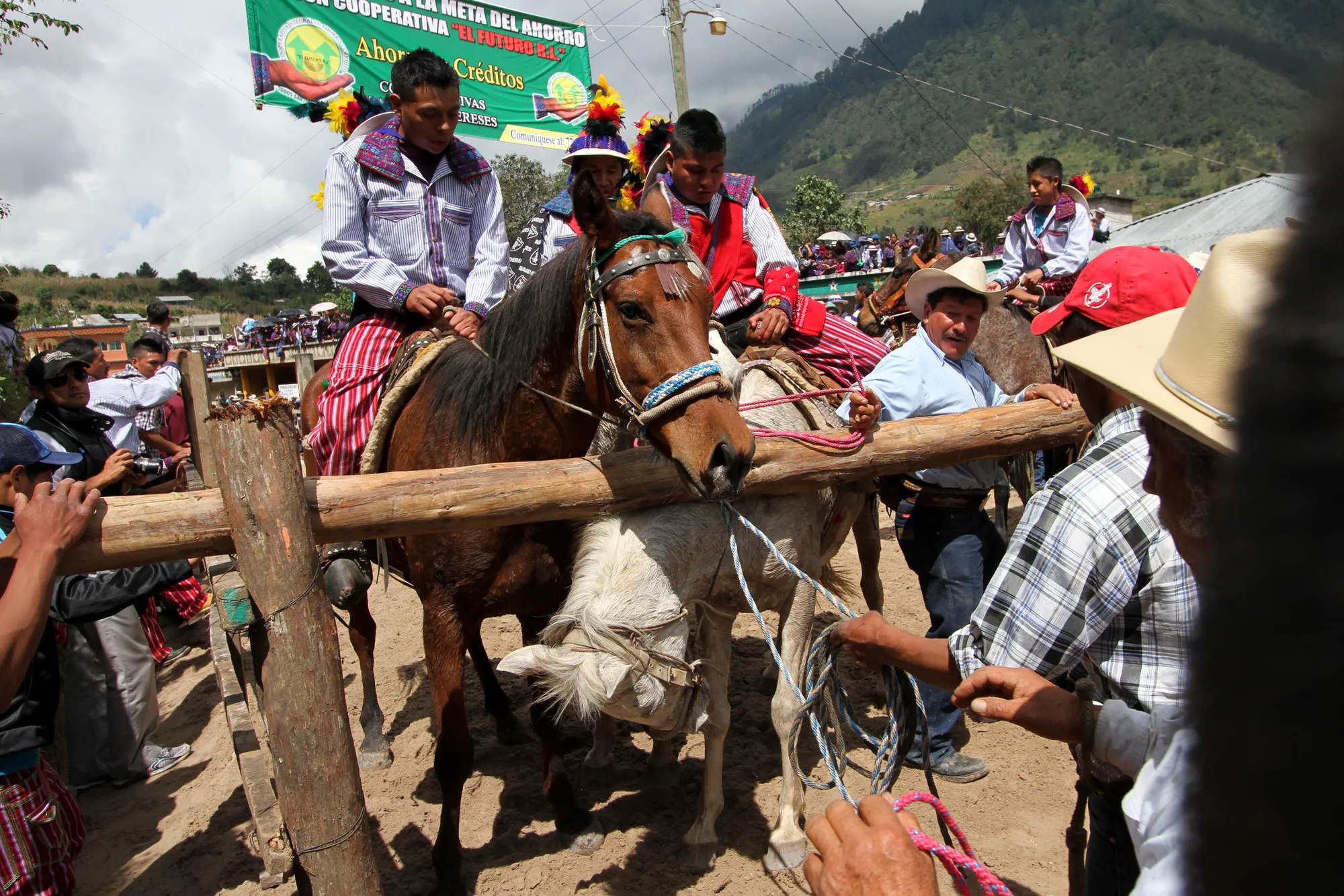
The horsemen donned the usual town outfit but jazzed it up with plumage and multicolored ribbons on their hats, as well as a variety of boldly colored shawls, including one American flag.
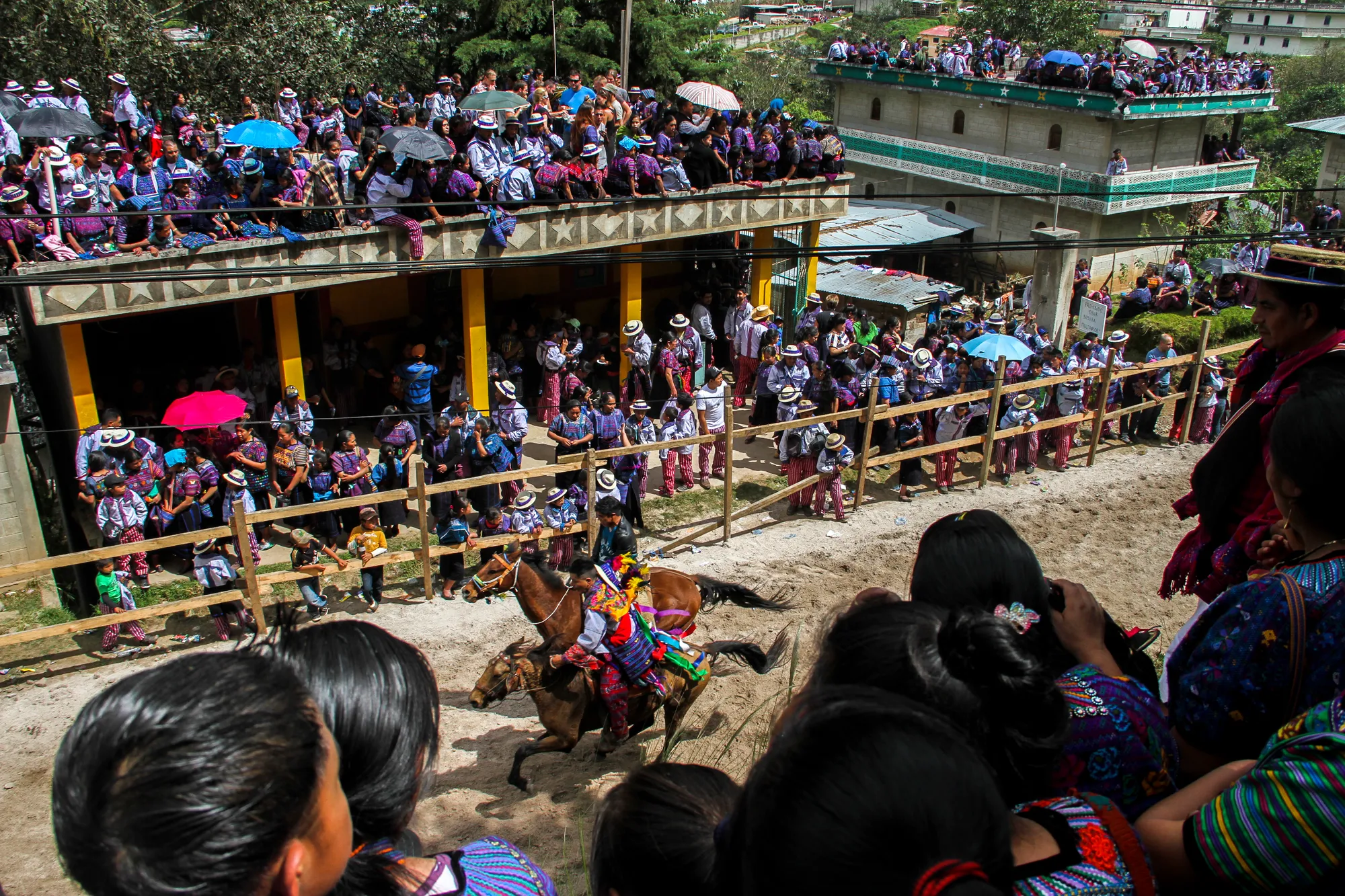
Some of them were so far in the drink that they would nod off while sitting on their horses. All of them had that possessed look of someone using all their concentration just to stay awake and stand upright. At the sound of a whistle, they would take off in a disorderly pack toward the other end — then come back, and repeat that again and again.
At times, they were not very effective at controlling the horses, however. To get them to even run, they’d often need help from the team of — apparently mostly sober — guys managing the show from the ground. The helpers would whip the horses and make kissing noises to get them excited. To stop them as they approached from the opposite direction, the men would kick sand up in the air.
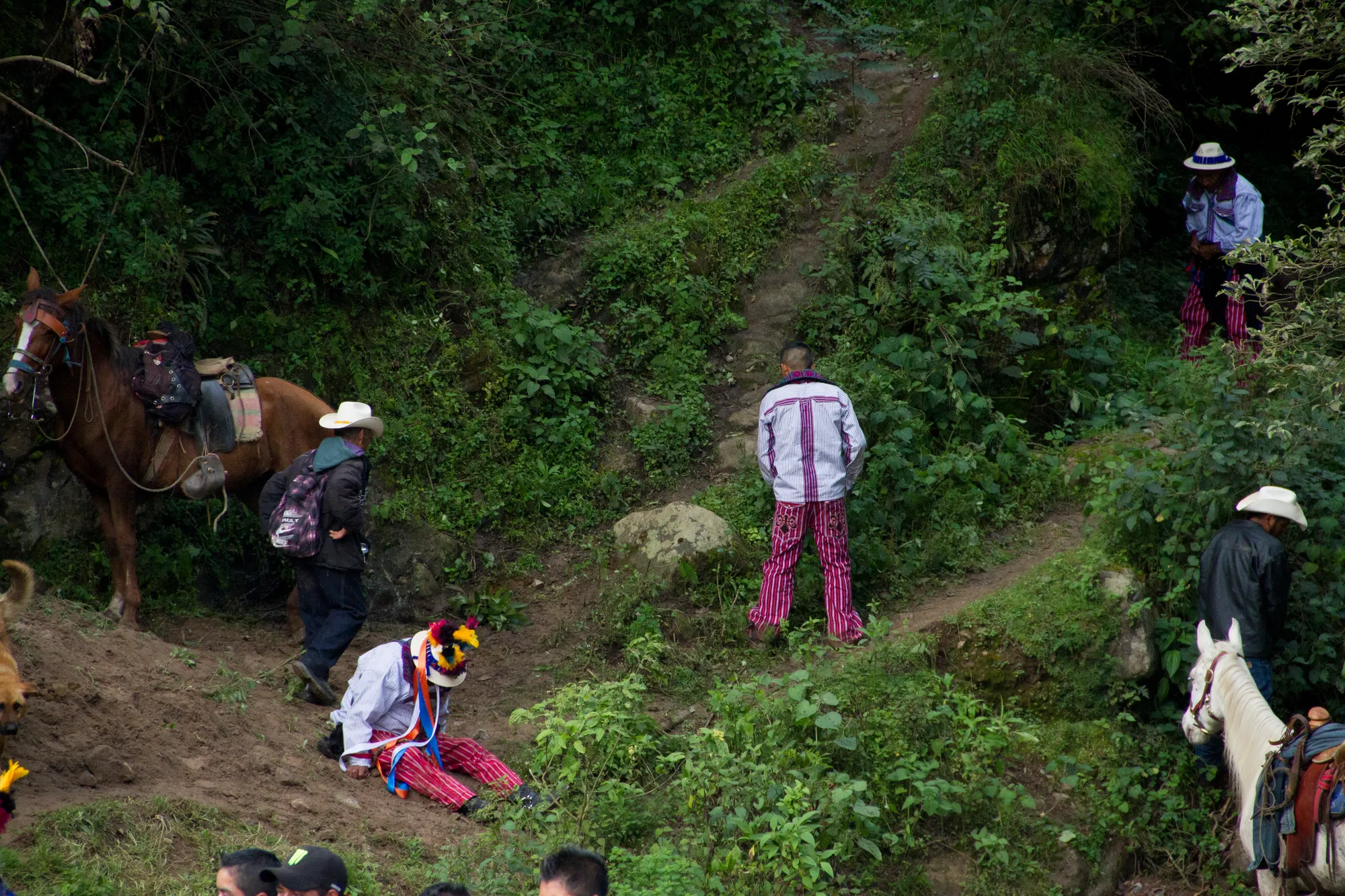
While riding, the horsemen would usually do some machismo thing like using no hands or leaning so far back they were almost lying down. They also made the coyote noise or just yelled at the top of their lungs, sometimes even carrying a dead chicken in one hand for extra fun. After going back and forth a few times, they would get worn out and exit the corral for a break — or another drink. Just as often as riding, they were urinating, falling over, napping or just plain unconscious.
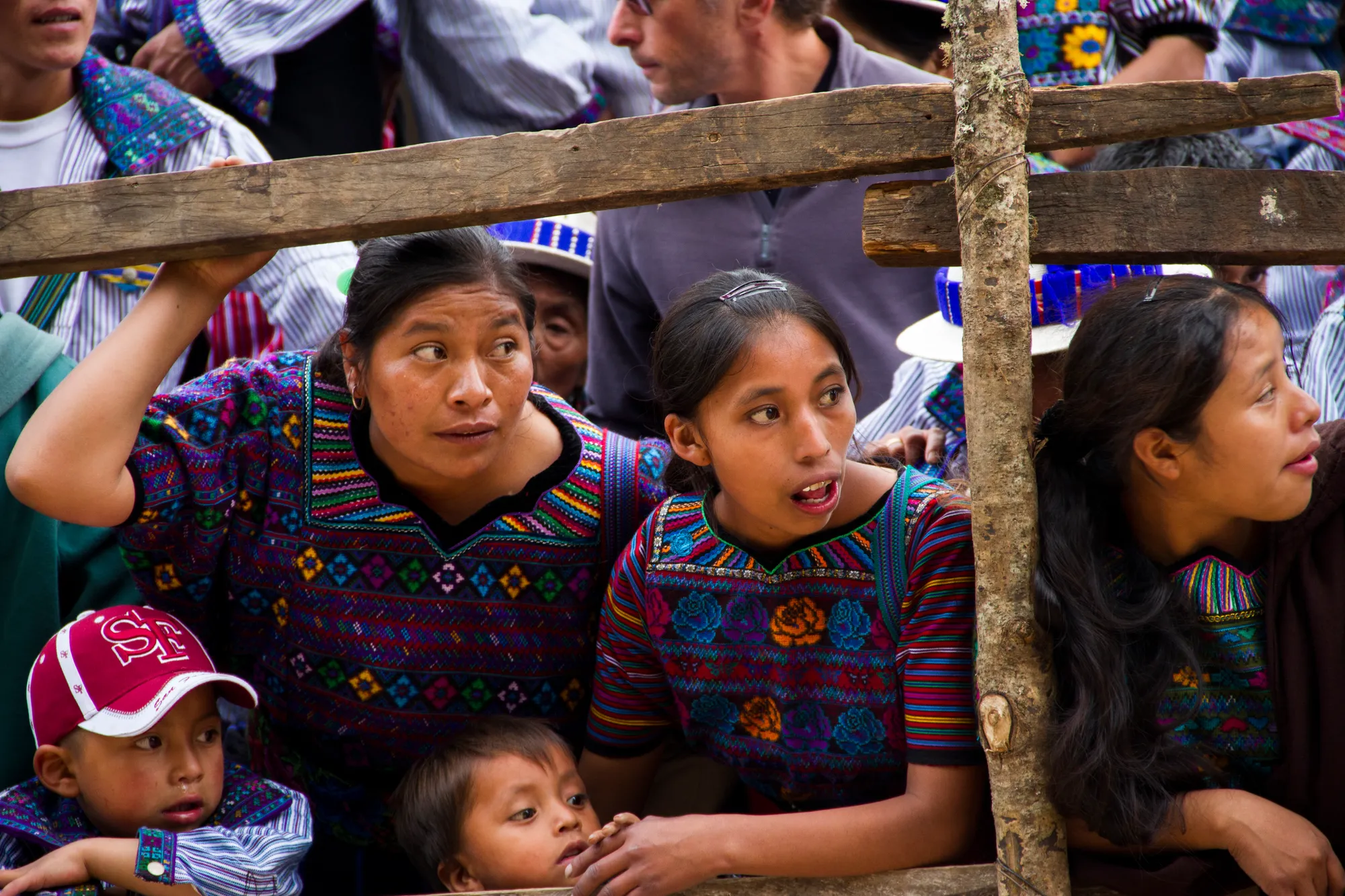
While I enjoyed the spectacle, I must say that the whole thing left me very conflicted. Besides the clearly destructive alcoholism and the danger of the uncontrolled horse riding, I drew further uneasiness from the cost of the whole thing in a community that has so little. One man told me the riders pay up to $2,000 each, which is a third of the average annual income.
The only way I can explain all this to myself was that I was witnessing a fervent need for catharsis. We all need to cut loose sometimes, of course, and it’s clear the Todosanteros have their methods down. Alcohol and danger are two of the greatest vices known to man — the same ones that drew me to Todos Santos.
I found a spot along the rail near one end of the corral against a steep slope. Pieces of garbage kept falling down next to me from the crowd on top of the hill. It felt dangerous to be standing that close to the frightened and unmanaged horses, but I couldn’t give up the thrill, and apparently neither could the crowd of adolescent boys standing on either side of me. Often we would jump back from the railing because some horse appeared to be veering right toward us, ready to slam into the fence. The horses’ coats were thick with sweat and their sides heaved with their breath.
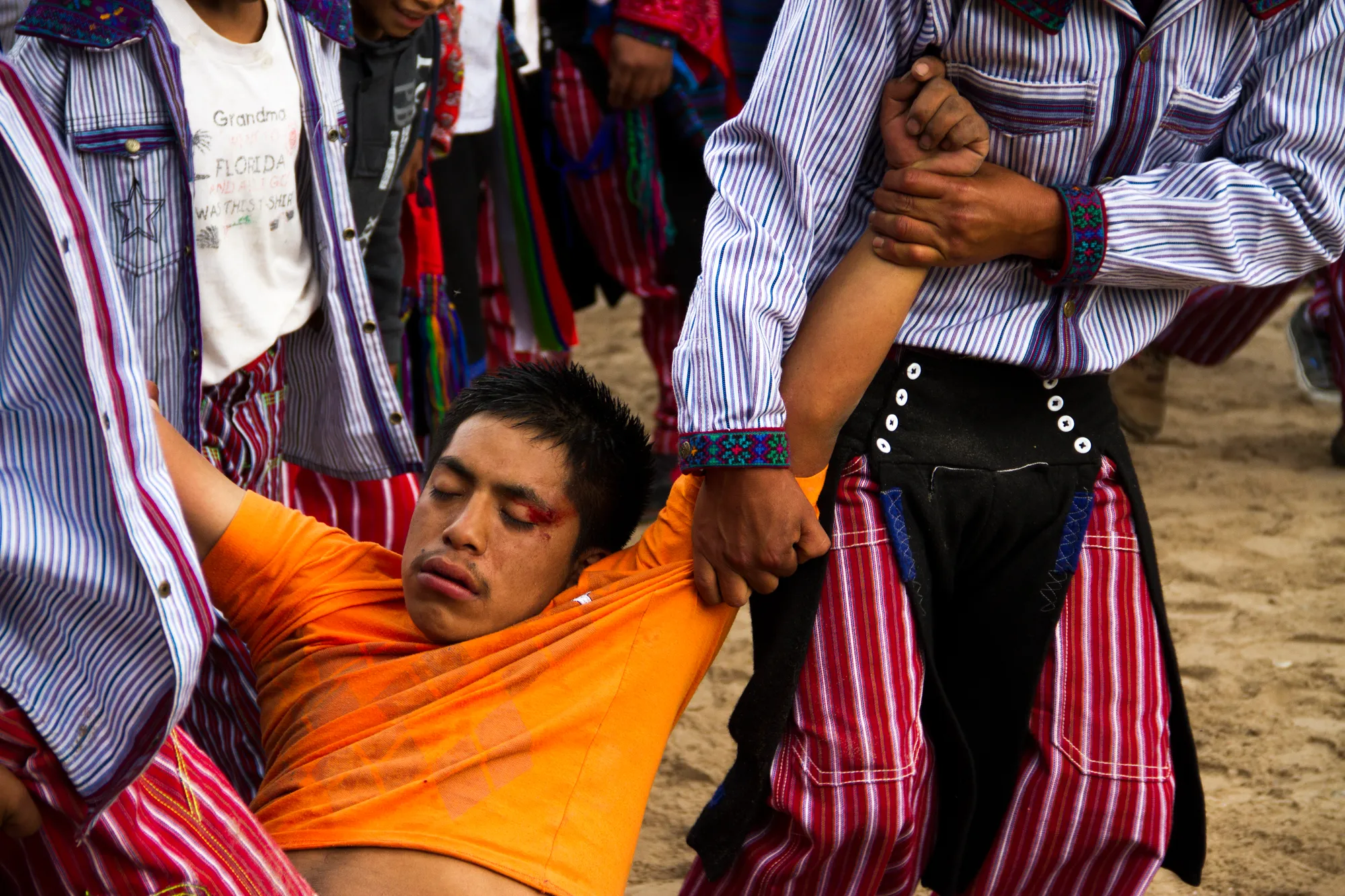
One man had blood on his face from a nasty gash above his eye. Another approached the end leaning so far back that he slid off his horse as it was coming to a stop. He hit the ground as other riders were still arriving and got kicked in the back by a hoof. But he popped up and was able to stumble off on his own power.
At one point there was a swarm of horses entering the track at once, charging forward and whinnying. I got the feeling things were spiraling out of control. There were now about twice the normal number of riders in the pen.
As if on cue, on the next round a man fell off his horse in the middle of the track. I saw someone reach in from the side of the course and drag his limp body behind the fence in a few quick jerks. The other riders slowly came back to our end, along with the riderless horse of the now-injured gentleman.
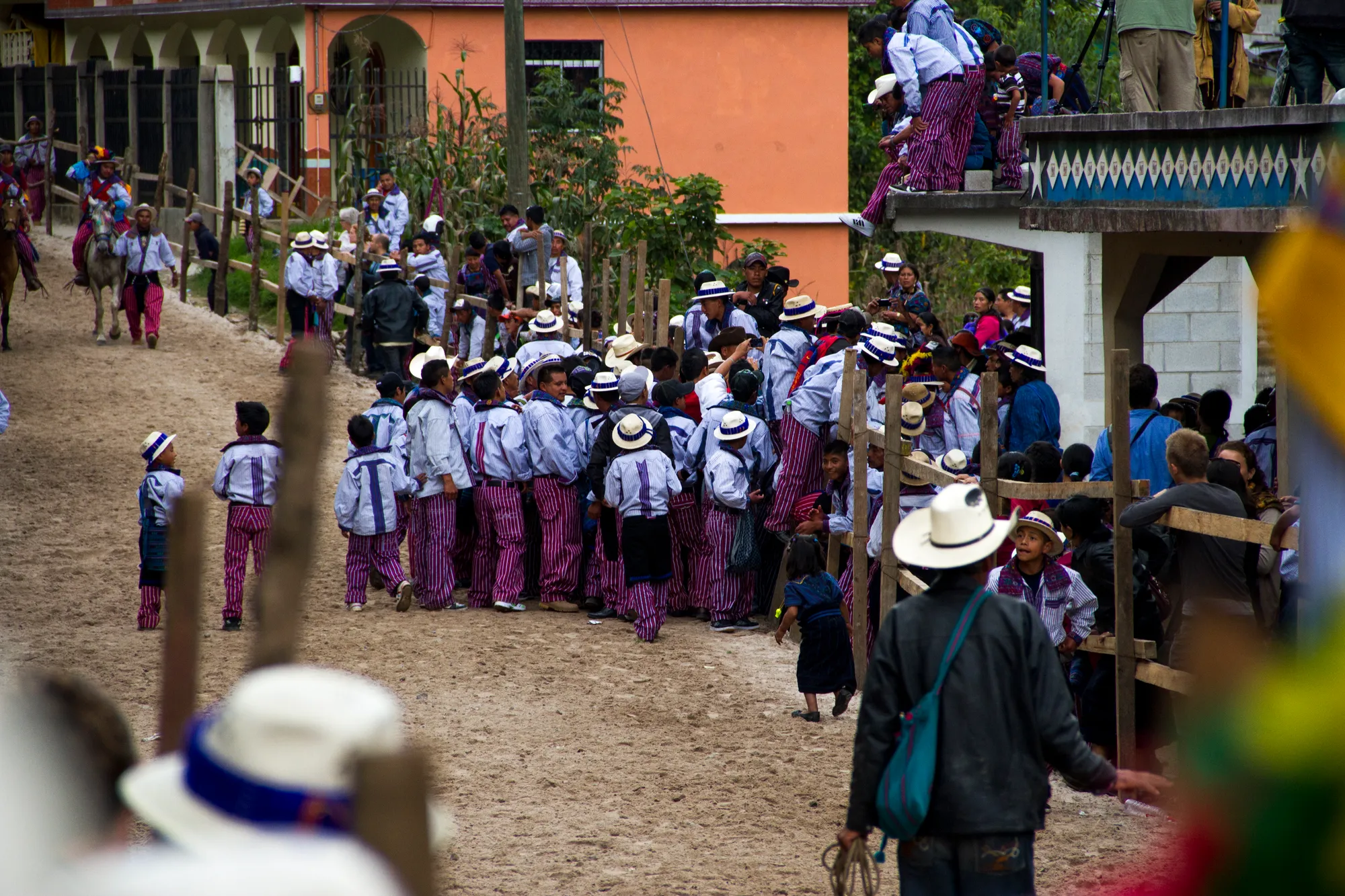
Shouting and frenzied conversation in Mam followed and I could understand nothing beyond the arm waving. A few people jumped into the track and ran down to see what was happening with the injured man, then many more followed and it quickly became a mob surrounding him.
At my end, there was a struggle to contain all the horses. One man wrapped the reins of a white horse around the fence post right in front of me, but the animal started nudging him forcefully and whinnying. Then it bucked up—I heard wood cracking and jumped back.
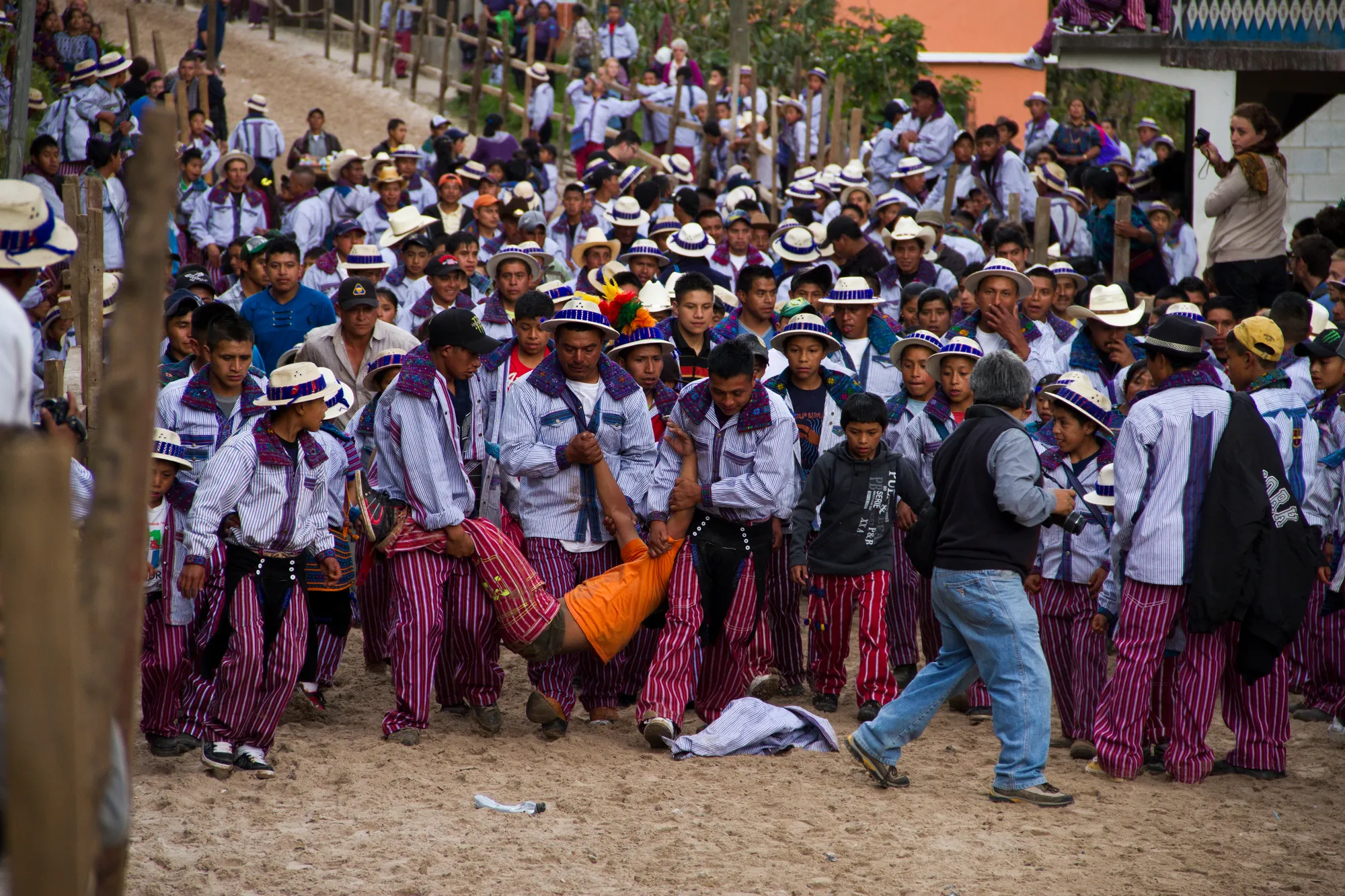
After a few moments, three men emerged carrying the injured man by his arms and legs. As they drew closer it was clear he was still unconscious, blood covering part of his face.
About 15 minutes later, things started rolling full bore again, but I’d seen enough. The street was packed on the way home with marimba bands and drunks everywhere. Often someone would just stumble right out in front of me, momentarily blocking my path. The women and some, mostly older, men sat on the sidewalks nearby and stared silently.
This is a disappointing ending, but I feel compelled to include it, even though I have been unable to verify it entirely. When I got back to Xela, my host family reported a news broadcast that one of the horse riders had died. I’m not sure if it’s the gentleman I saw unconscious or not. It’s a sad, sad twist to this story, but it’s also horrifyingly normal. There are no news reports in Guatemala that aren’t plastered with violence.
-fin-